
SwiftNet can be a good rural home internet option if your property has usable cellular signal. Start with 5G Diamond if the goal is daily home internet for work, streaming or multiple devices. Use 4G Bronze as a lighter backup or cabin-weekend option. Skip both if your location has weak signal and you need guaranteed always-on internet.
We may earn a commission when you buy through our links. See our Affiliate Disclosure.
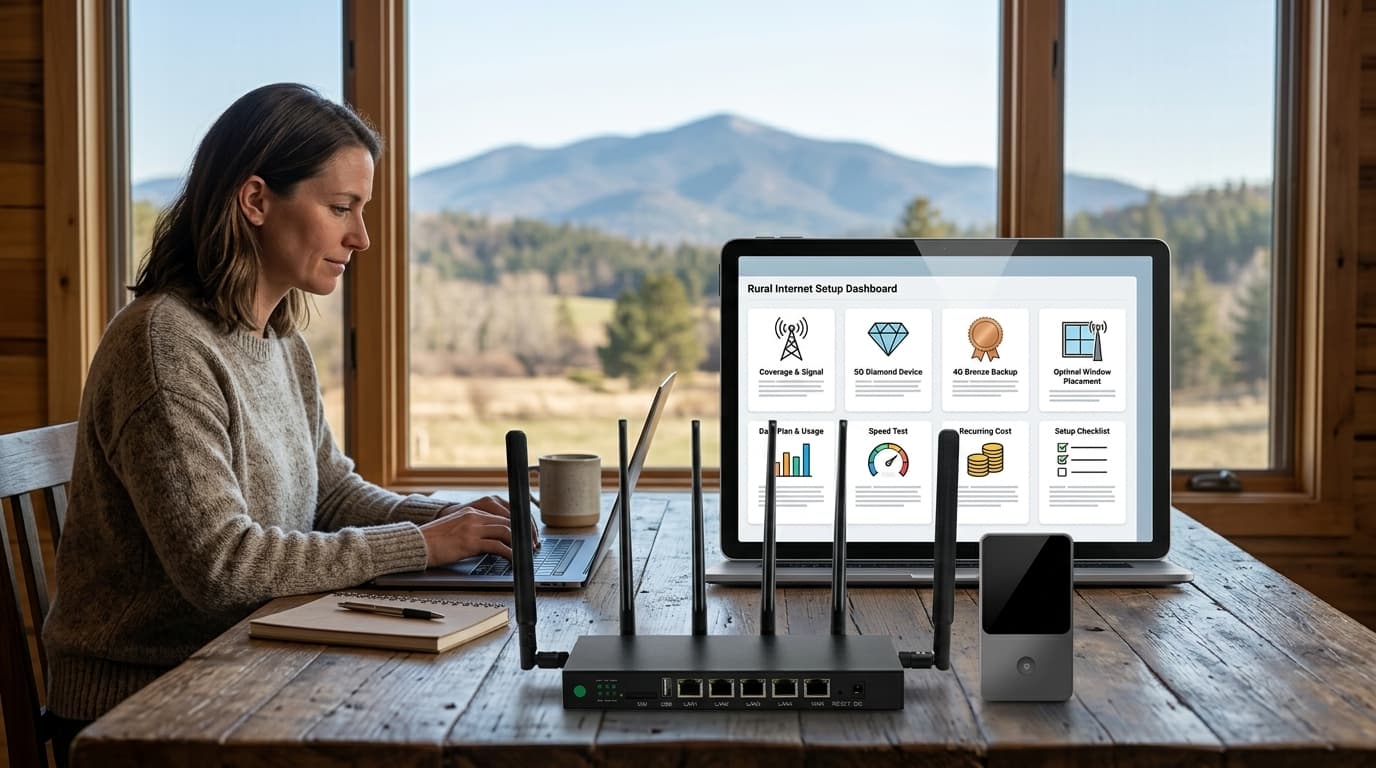
5G Diamond is the safer first check for most rural homes. 4G Bronze is the lighter backup pick.
There is no single best rural internet provider for every address. The better pick is the one that works at your exact property, supports your daily workload and still makes sense after device terms, data tier, trial timing and recurring subtotal.

SwiftNet is a cellular rural internet path, not a magic replacement for every address.
Rural homes usually compare satellite, fixed wireless, DSL and cellular 4G/5G. SwiftNet sits in the cellular category. That can be easier to set up than satellite hardware and more flexible than old wired options, but cellular coverage is still the gatekeeper. If your property has poor signal, the checkout page will not fix that for you. Shocking, yes, but physics remains annoying.
Where SwiftNet belongs.
Best to consider when the property has usable tower signal and you want router or hotspot internet without satellite hardware.
Better when cellular is weak.
Worth comparing when the property has poor tower coverage but decent sky visibility.
Great if line of sight works.
Can be strong in rural areas, but availability is address-specific.
The fallback nobody dreams about.
It may be available where nothing else is, but speed and reliability can be limiting.
Start with 5G Diamond if this is daily home internet, not just a backup line.
5G Diamond is the plan I would check first for rural homes because the router format makes more sense for multiple devices, longer sessions and a fixed placement near a window. It is not automatically better everywhere. It earns the recommendation only if your location has usable cellular coverage.

Buy if
- ✅ You need internet for a rural home or cabin most days.
- ✅ Multiple devices connect at once.
- ✅ Remote work, streaming or calls matter.
- ✅ You can place the router near a window.
- ✅ You will test early during the trial period.
Skip if
- ✕ Your property has weak cellular signal.
- ✕ You only need occasional email or maps.
- ✕ You expect wired-home stability without testing.
- ✕ You refuse to move and test placement.
Choose 4G Bronze for rural backup, cabin weekends and lighter use.
4G Bronze is the cleaner pick for backup internet, cabin weekends and light rural use. It makes more sense for email, messages, maps and simple browsing than for a busy rural household with work calls, uploads, streaming and multiple devices.

Buy if
- ✅ You need backup internet, not whole-home replacement.
- ✅ You visit a cabin on weekends.
- ✅ One or two people use light tasks.
- ✅ You want a smaller hotspot-style setup.
Skip if
- ✕ Several people stream at once.
- ✕ Daily work calls matter.
- ✕ Uploads are important.
- ✕ You expect it to carry a whole rural household.
Coverage is the dealbreaker. Plan choice comes second.
A better plan does not fix a bad tower location, heavy tree cover, metal walls, a rural valley or a house placed in the cellular version of a mood swing. Before buying, check coverage, then decide where the device will sit.

Check the coverage guide. Start with the map, then assume real-world testing still matters.
Walk the property with your phone. Signal can change between rooms, windows, porches and outbuildings.
Test near windows. Avoid closets, metal surfaces, appliances and deep interior rooms.
Watch terrain. Trees, hills, valleys and metal walls can matter more than plan names.
Use the trial quickly. The return policy is not a suggestion box for procrastination.
Set it up like a fixed home connection, then test like you might return it.
The rural setup should be boring and repeatable: place the router or hotspot in a strong-signal spot, connect one device first, run speed tests, check data use and keep packaging until you know the setup works. Boring is the goal. Boring means fewer support tickets, which is humanity making tiny progress.
Choose the role. Main rural internet points toward 5G Diamond; backup points toward 4G Bronze.
Pick the data tier. 100GB, 200GB or Unlimited should match the house, not your optimism.
Place first, then judge. Window placement usually deserves the first test.
Run one-device tests. Do not load the network with every device before the first baseline.
Screenshot checkout and policy details. ORION04, recurring subtotal, shipping, trial and return rules all matter.
Do not choose data by hope. Choose it by what the house actually does after dinner.
Rural homes can burn data faster than expected, especially with streaming, work calls, cloud backups, cameras, gaming downloads and multiple devices. If the connection is only a backup line, smaller data tiers may fit. If it is the main home connection, under-buying data is just future annoyance with a receipt.

ORION04 is worth trying, but the recurring subtotal matters more than the first discount.
ORION04 can reduce eligible SwiftNet plan orders by $20. That is useful, but rural home buyers should care more about recurring subtotal, data tier, device rent-or-buy terms, shipping, trial timing and return rules than the first checkout alone.

SwiftNet is easiest to consider when cellular signal is usable.
SwiftNet is easier to consider if cellular signal is usable and you want a router or hotspot setup without satellite hardware. Starlink may be stronger where cellular coverage is poor but sky visibility is good. Fixed wireless can be excellent if line of sight works. DSL is usually the fallback when nothing better works, which is not exactly a love story.

SwiftNet can work for rural homes, but it is not a universal fix.
Coverage can be inconsistent.
That is the biggest rural risk. It is manageable only if your property has usable signal.
5G Diamond still depends on tower quality.
The router format helps the setup, but it does not create tower capacity.
4G Bronze is not a whole-home workhorse.
It is better as backup or light cabin internet than as the main pipe for a busy house.
Trial timing and returns matter.
Test early, keep packaging and read the shipping and return policy before the clock becomes your enemy.
SwiftNet Rural Home Internet FAQ
For most rural homes with usable SwiftNet coverage, start with 5G Diamond.
5G Diamond is the easier recommendation for daily rural home internet, remote work, streaming and multiple devices. Choose 4G Bronze if you need lighter backup, simple cabin internet or a smaller hotspot-style setup. Skip SwiftNet if cellular signal is weak where the device will sit. The right answer is not the plan with the best name. It is the plan that works at your actual property after coverage, data, cost, setup and return rules make sense.