We explain the offer before asking readers to trust the discount.
CandidCodes is an independent coupon, deal, store-review, buyer-guide, and SaaS-pricing publisher. We connect commercial offers with the evidence, eligibility rules, merchant policies, and buyer context needed to make a more informed decision.
Founded and reviewed by Nguyen Van DinhPublisher-led affiliate contentLast reviewed: August 8, 2026
CandidCodes publishes evidence-led coupon, deal, merchant-review, buyer-guide, and SaaS-pricing content for readers comparing an online purchase.
A coupon code is useful only when a shopper can understand what it applies to, how the advertised saving was calculated, and what could change at checkout. The same standard applies to a store review or product recommendation: a strong headline is not enough without current pricing, clear policies, buyer fit, and visible limitations.
CandidCodes was created to bring those elements together. Our pages are designed to help shoppers find a relevant offer, verify the buying route, compare realistic alternatives, and understand the merchant before following a link. For brands and affiliate networks, this means CandidCodes operates as a transparent editorial publisher rather than a code directory that republishes unsupported claims.
We do not claim that every merchant, product, or promotion is suitable for every reader. Our role is to document the available evidence, explain the decision, and make the commercial relationship visible.
What CandidCodes publishes
Our coverage follows the parts of the buying journey that most often affect conversion, customer expectations, and post-purchase satisfaction.
Coupon and deal pages
Separate codes, sales, and automatic offers
We distinguish a public coupon from an automatic promotion, product markdown, bundle, free-shipping threshold, account-specific offer, or new-customer incentive. Where evidence is available, we record the code, discount type, eligible products, minimum spend, exclusions, market, stacking behavior, and final price.
Store reviews
Evaluate the merchant behind the landing page
We examine company and contact information, product presentation, pricing clarity, checkout conditions when accessible, shipping, returns, refunds, warranty coverage, support routes, and external reputation signals. No single badge, rating platform, or affiliate relationship is treated as proof on its own.
Buyer guides and comparisons
Explain who an option is actually for
We compare meaningful differences, real use cases, price, limitations, and alternatives. A guide should state what the extra money buys, who may benefit, who should keep looking, and when a lower-priced or better-supported option makes more sense.
SaaS and software pricing
Make plan structure and billing commitments visible
Software coverage can include free tiers, trial rules, monthly and annual billing, renewal context, user or usage limits, included features, add-ons, cancellation information, and the type of customer each plan is designed to serve.
How we verify a merchant, offer, and buying route
Our workflow changes with the category, but the standard does not: the published claim should be traceable to evidence, expressed with the correct limits, and useful to the reader who may act on it.
We identify the source and market:
We start with the official merchant site, product or pricing page, promotion page, checkout, policy page, affiliate-network information, or another source directly connected to the claim. We note the relevant country, currency, customer type, and date because eligibility can vary by market.
We classify the offer correctly:
We determine whether the saving comes from a coupon, automatic discount, sale price, bundle, free item, shipping benefit, loyalty benefit, or personalized promotion. We do not present one offer type as another simply because a more attractive percentage would result.
We check the calculation and conditions:
When possible, we compare the reference price, current price, code saving, and final price. We review minimum spend, product exclusions, first-order rules, regional restrictions, expiration signals, and whether the offer can be combined with another promotion.
We evaluate the merchant policies:
A discount can lose value when shipping is expensive, returns are unusually restrictive, warranty language is unclear, or support is difficult to reach. We therefore review the policies that can change the buyer’s real cost and risk after checkout.
We publish the evidence and its limits:
The page should distinguish what CandidCodes verified, what the merchant states, and what could not be completed or confirmed. We avoid guaranteed-availability language because inventory, eligibility, prices, and program terms can change.
We revisit material changes:
Important pages are reviewed when codes stop working, prices change, products disappear, program terms are updated, or readers and merchants provide credible evidence. A correction is based on the source, not on whether the original conclusion was commercially convenient.
Examples of the evidence we record
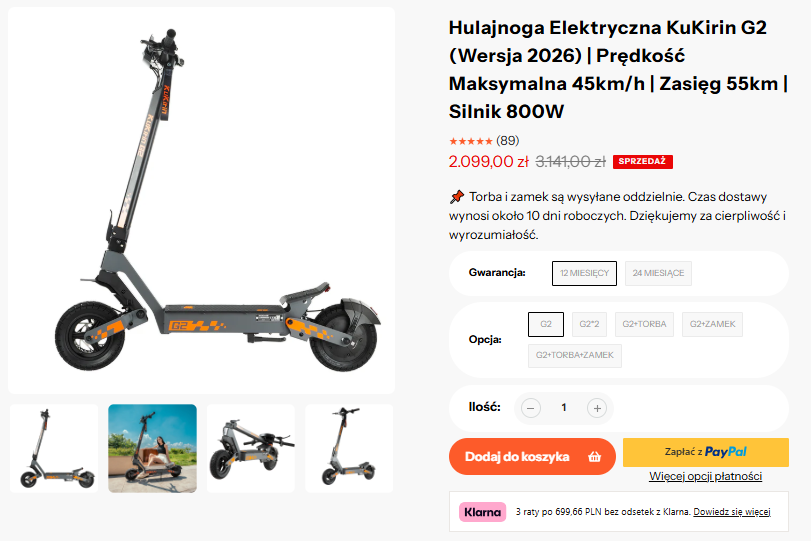
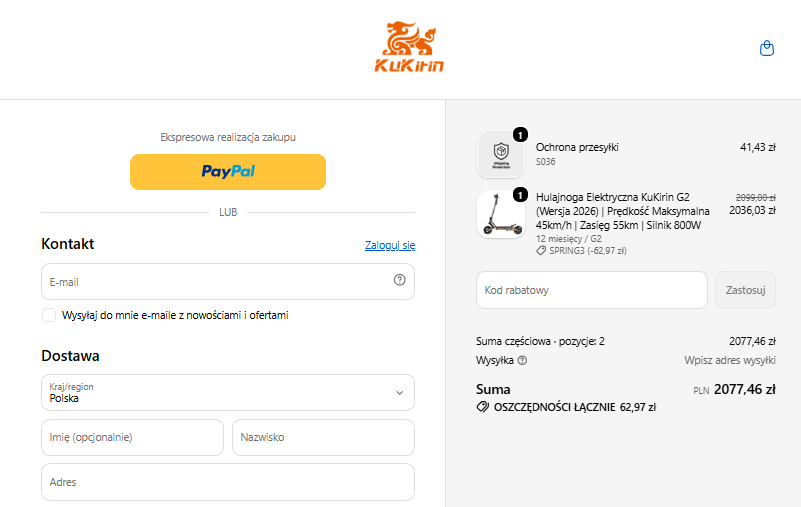
The images below illustrate how a current product-page price and checkout result can support separate claims. They are not presented as proof that a promotion will remain available to every reader.
Deal evidence: the KuKirin G2 2026 product page displayed 2,099.00 PLN against a 3,141.00 PLN reference price. CandidCodes records the product, market, currency, source, and date rather than relying on a percentage headline alone.Coupon evidence: the checkout record showed the product at 2,036.03 PLN with 62.97 PLN in savings after the 3% promotion. A separate 41.43 PLN shipping-protection line was visible, so it should not be combined with the product discount when explaining the saving.
How CandidCodes works with brands and affiliate networks
CandidCodes participates in affiliate programs operated directly by merchants and through established affiliate networks. Those relationships can provide tracked links, official product information, current program terms, approved creative assets, market eligibility, and a reliable route for factual corrections.
A brand or network may help us improve accuracy by supplying a current landing page, eligible-product list, promotion terms, policy links, geographic restrictions, or evidence that a published detail has changed. That information is reviewed against the live destination and the context of the page. It does not create a right to approve our conclusion, remove a supported limitation, or convert an unsuitable offer into a recommendation.
What partners can expect
Clear publisher identification, visible affiliate disclosure, merchant-specific landing pages, accurate offer classification, reasonable use of approved information, and a contact route for corrections, program updates, compliance questions, and partnership inquiries.
What CandidCodes asks from partners
Current terms, valid destination URLs, eligible markets, accurate pricing or promotion details, usable policy links, approved creative guidance when relevant, and a contact who can clarify material changes.
What commercial participation does not guarantee
Coverage, ranking, a positive verdict, a particular placement, permanent promotion of an expired offer, or removal of evidence-based criticism. Editorial value and reader fit remain separate from commission potential.
Traffic, promotion, and program compliance
CandidCodes may reach readers through organic search, direct visits, referrals, social channels, and paid search where the merchant or affiliate program permits it. The landing page is intended to match the reader’s query with relevant merchant information, current offers, practical buying guidance, and a clear route to the official store.
Before paid promotion is used for a merchant, the applicable program terms should be reviewed for trademark bidding, protected keywords, direct linking, display URLs, geographic targeting, ad-copy restrictions, coupon claims, and other traffic rules. When a program prohibits a channel or tactic, that restriction takes priority over the potential commission.
CandidCodes does not present itself as the merchant, process the merchant’s checkout, collect the buyer’s payment-card details, or promise that a merchant will accept a code. We do not use forced clicks, automatic cookie placement, adware, misleading redirects, or an unsupported “verified” label to manufacture attribution. Readers choose whether to follow an outbound link and complete a transaction on the merchant website.
Who leads CandidCodes
CandidCodes was founded and is operated by Nguyen Van Dinh. As Founder, CEO & Editorial Lead, he is responsible for the publisher’s research direction, merchant evaluation framework, coupon and price verification standard, commercial disclosures, correction process, program compliance, and the continued development of CandidCodes across shopping categories.
Editorial responsibility: store reviews, coupon verification, deal calculations, buyer guides, software pricing, affiliate disclosures, partner communication, corrections, and standards applied across CandidCodes.
Partner communication
Nguyen reviews program terms, eligible markets, approved landing pages, offer conditions, and policy updates supplied by brands or affiliate networks. Commercial access can improve factual accuracy, but it does not grant editorial control over coverage, placement, or conclusions.
Evidence-led corrections
Correction requests are checked against a current primary source, dated checkout evidence, or a documented policy change. When the evidence supports an update, CandidCodes corrects the material detail while preserving a clear boundary between a factual correction and a request to remove justified criticism.
Standards across CandidCodes
Every category follows the same core controls: identify the source and market, classify the offer accurately, verify material conditions, disclose commercial relationships, state limitations, and provide a route for review. This keeps the publisher accountable as coverage expands.
Editorial independence and reader protection
CandidCodes may earn a commission when a reader follows an eligible link and completes a qualifying purchase. This can support research, hosting, publishing, offer checks, and content updates. It does not increase the price set by the merchant, make CandidCodes the seller, or guarantee favorable coverage.
Evidence before percentage
A large advertised saving is not treated as proof of value. We consider the reference price, current price, code conditions, competing options, product fit, and the policies that affect the buyer after checkout.
Disclosure before conversion
Readers should be able to understand that some links are commercial before acting on a recommendation. Affiliate relationships are disclosed without suggesting that a commission makes the underlying evidence stronger.
Corrections without editorial surrender
Readers, brands, and networks may submit evidence. CandidCodes reviews that evidence and decides what should change, how the correction should be explained, and whether the original conclusion remains supported.
No invented urgency
We do not create unsupported countdowns, expiration dates, scarcity claims, coupon codes, prices, customer ratings, or product benefits. When timing is unclear, the page should tell readers to confirm the final terms with the merchant.
What readers, brands, and networks should expect
A CandidCodes page should make the commercial route understandable. Readers should be able to identify the merchant, offer type, relevant conditions, source of the claim, buying context, and limitations before leaving for the store.
Brands and networks should be able to identify who operates the publisher, how traffic may be generated, how commercial relationships are disclosed, how evidence is checked, and where to send a material update. They should not need to infer whether CandidCodes is a merchant, an automated code scraper, or an anonymous redirect site.
We will not always have every answer or complete every checkout. Professional publishing requires being precise about that boundary. Our standard is to show what was reviewed, explain what remains uncertain, and update the record when stronger evidence becomes available.
Frequently asked questions
Is CandidCodes a merchant or marketplace?
No. CandidCodes is an independent publisher. Product availability, order acceptance, payment, shipping, returns, refunds, warranty service, and customer support remain the responsibility of the merchant.
Who owns and operates CandidCodes?
CandidCodes was founded and is operated by Nguyen Van Dinh, Founder, CEO & Editorial Lead. His author and accountability information is available on the Nguyen Van Dinh profile.
Does CandidCodes test every coupon and product?
No. We test or verify what can reasonably be checked and describe the evidence used. Some coupon coverage includes checkout evidence; other pages rely on current merchant terms or public offer information. Some product coverage may include hands-on use, while other articles are research-led. We do not claim a test that did not occur.
Can a brand or affiliate network request a correction?
Yes. Send the relevant URL, the disputed detail, and a current source. Factual corrections are welcome. A request to remove a supported limitation or rewrite an editorial conclusion solely because it is commercially inconvenient is treated differently.
Does an affiliate relationship guarantee promotion?
No. Participation may provide tracking, official information, or a communication route, but it does not guarantee coverage, paid promotion, ranking, a positive verdict, or ongoing placement after an offer becomes outdated.
How can a brand or network contact CandidCodes?
Email contact@candidcodes.com with the merchant name, program or network, relevant URLs, markets, request type, and deadline. Specific information helps us route and verify the inquiry faster.
Contact & verification
Corrections, partnerships, and program questions
For a factual correction, include the page, disputed detail, and current evidence. For a partnership or affiliate-network inquiry, include the merchant, program, eligible markets, approved destination, relevant restrictions, and the type of collaboration being considered.