
Starlink is the better fit when you camp or live far from workable cellular coverage. SwiftNet WiFi makes more sense when 4G or 5G coverage is already usable and you want a lighter, more portable cellular path for RV, rural, travel or backup internet.
We may earn a commission when you buy through our links. See our Affiliate Disclosure.

Start with coverage reality, not brand loyalty.
If your real location has usable cellular signal, SwiftNet WiFi is the simpler route to check first. If your route, cabin, ranch or campsite sits far away from reliable cellular coverage, Starlink is the better internet path to compare first.
SwiftNet WiFi vs Starlink: The Setup That Fits the Job
The real question is not “which brand is better?” The useful question is whether your actual location has usable cellular coverage. That one boring detail decides more than any shiny internet marketing page, tragically.
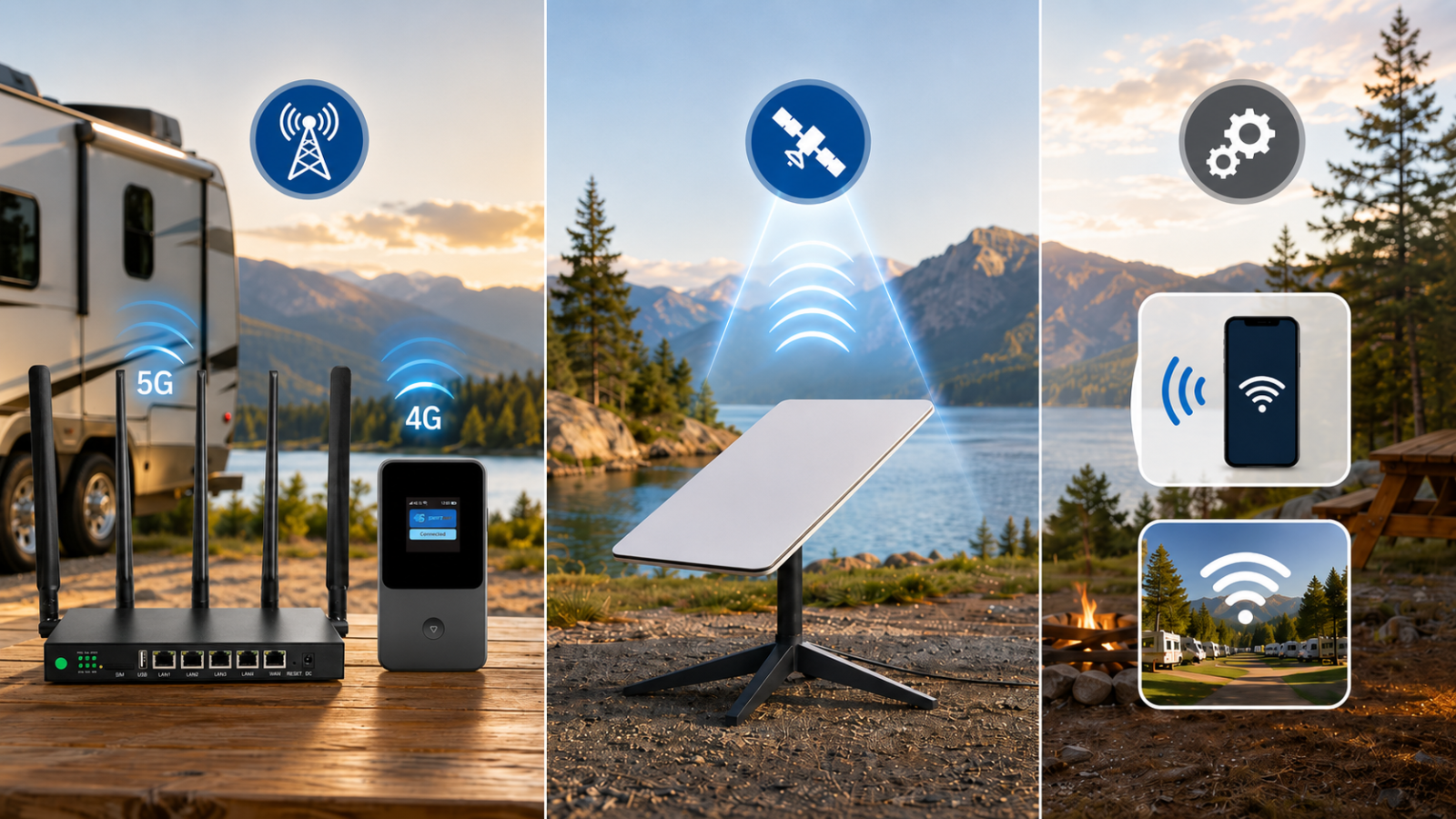
Starlink
Satellite makes more sense when cellular service is weak, unreliable or unavailable.
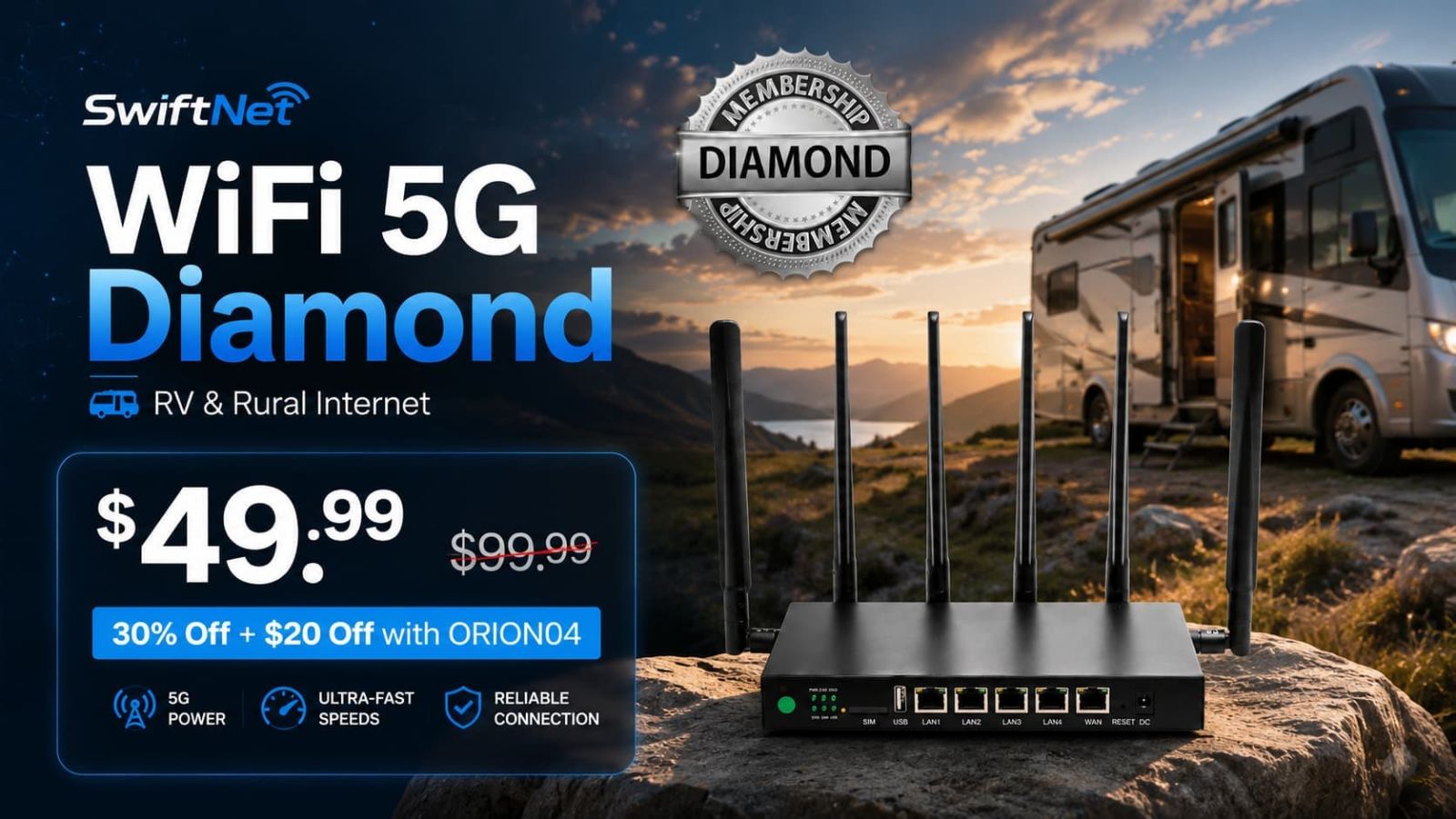
SwiftNet 5G Diamond
A router-style cellular path can be simpler when coverage already works.
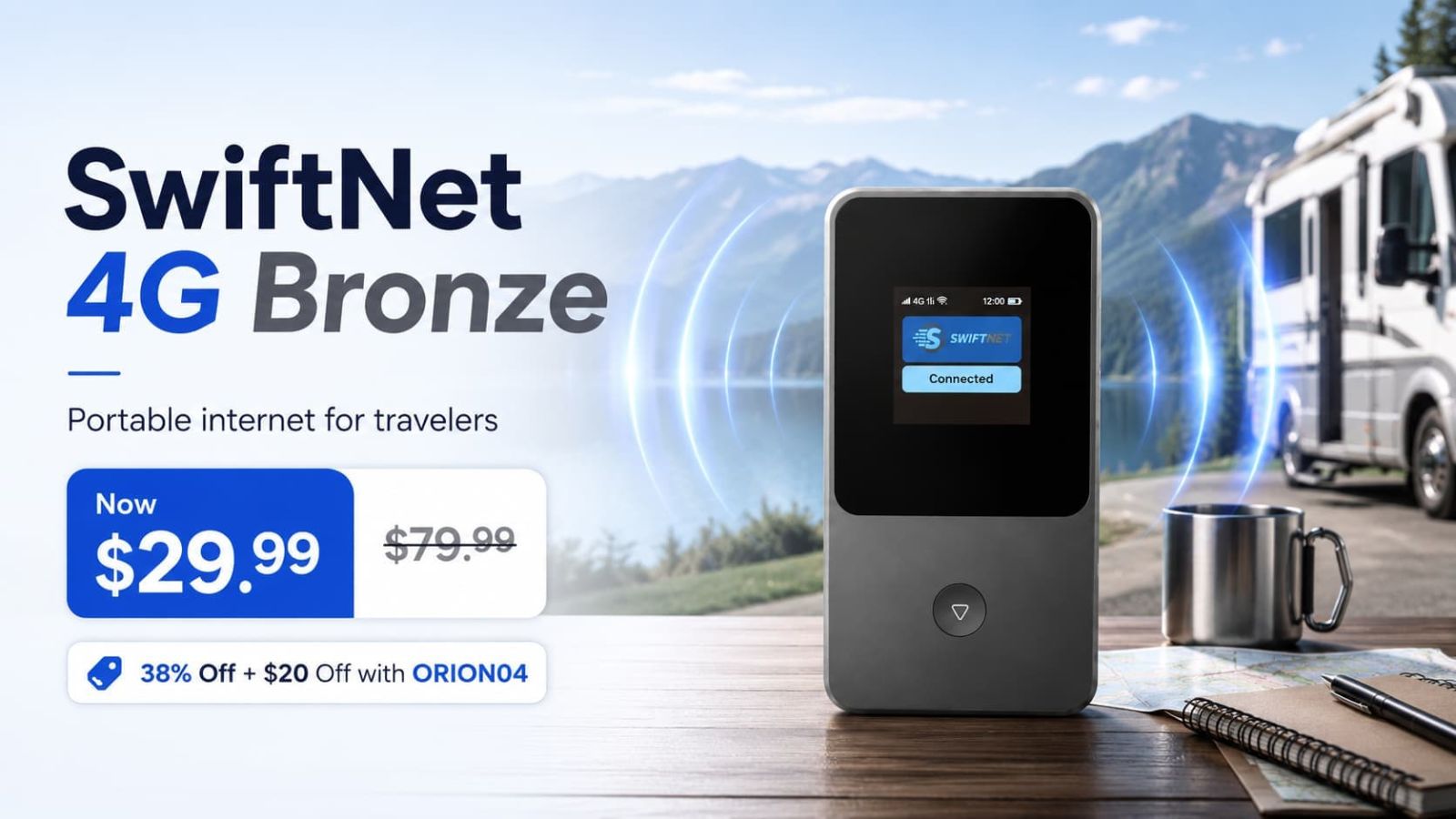
SwiftNet 4G Bronze
It is the lighter budget path for maps, email, messages and backup browsing.
Depends
Starlink wins if there is no usable cellular. 5G Diamond is the SwiftNet route if cellular coverage works.
SwiftNet + Waveform
Waveform can help with placement and support. It cannot create service from nothing.
Use This Decision Tree Before You Compare Prices
Price matters after the connection path makes sense. A cheap plan that fails at the campsite is not a deal. It is a tiny subscription to disappointment.
Do you have usable cellular signal where you park, work or live?
If yes, SwiftNet WiFi is worth checking first. If no, compare Starlink first.
Do you need internet daily for calls, uploads or streaming?
If cellular works, start with 5G Diamond. If cellular does not work, Starlink is the better path.
Do you only need travel, camping and backup browsing?
If the use case is light and mobile, 4G Bronze is easier to justify than a heavier setup.
Is the signal weak indoors but usable nearby?
Consider Waveform only after you know the problem is signal support, not total coverage absence.
SwiftNet WiFi Is Better When Cellular Already Works
SwiftNet is not trying to solve every off-grid internet problem. It makes the most sense when cellular coverage is already workable and you want a plan path that can fit RV, rural, travel or backup use.
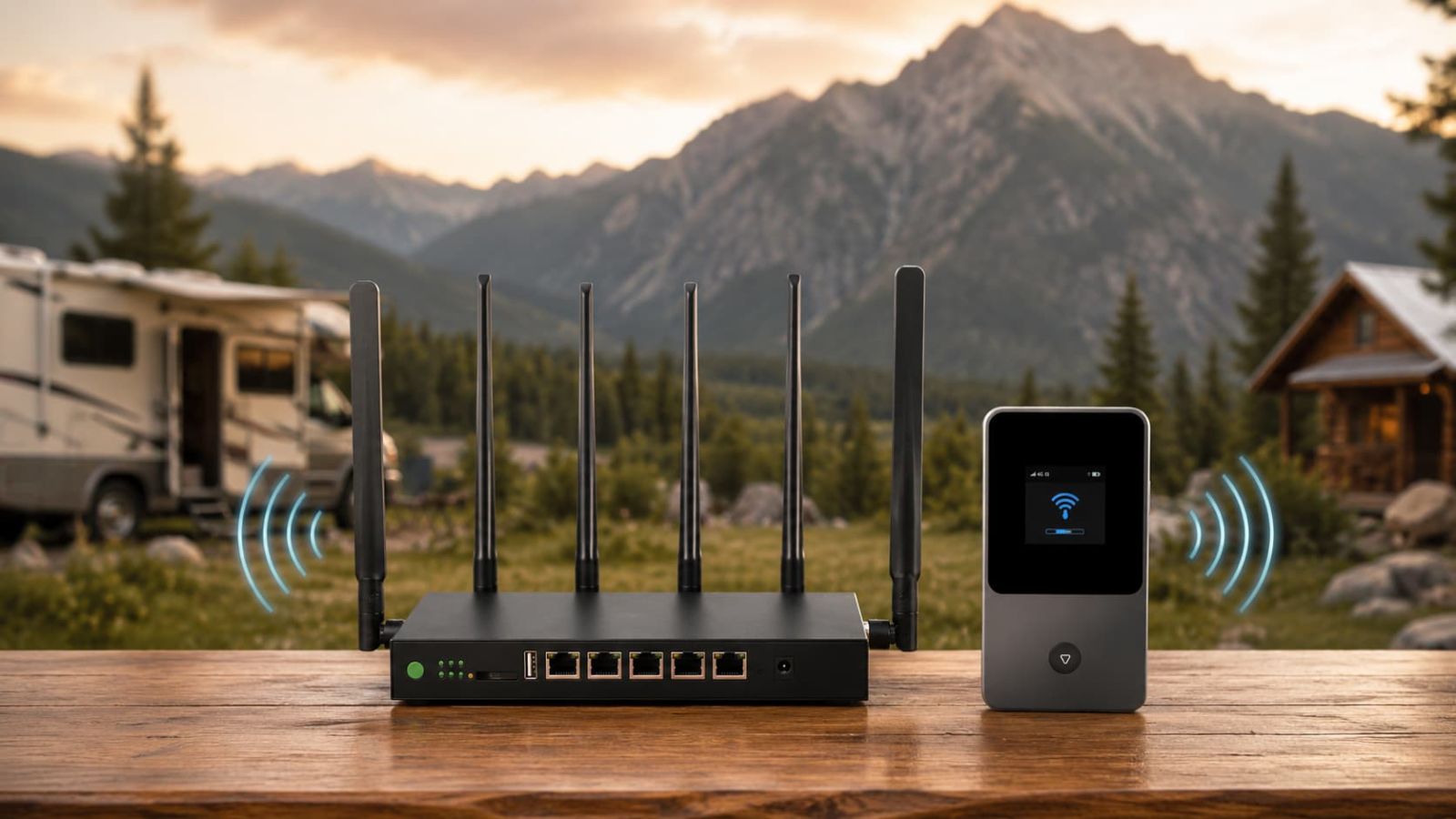
Better for workable 4G/5G coverage
If your campsite, route, rural home or work location already has usable cellular signal, SwiftNet is the cleaner option to evaluate before jumping to satellite.
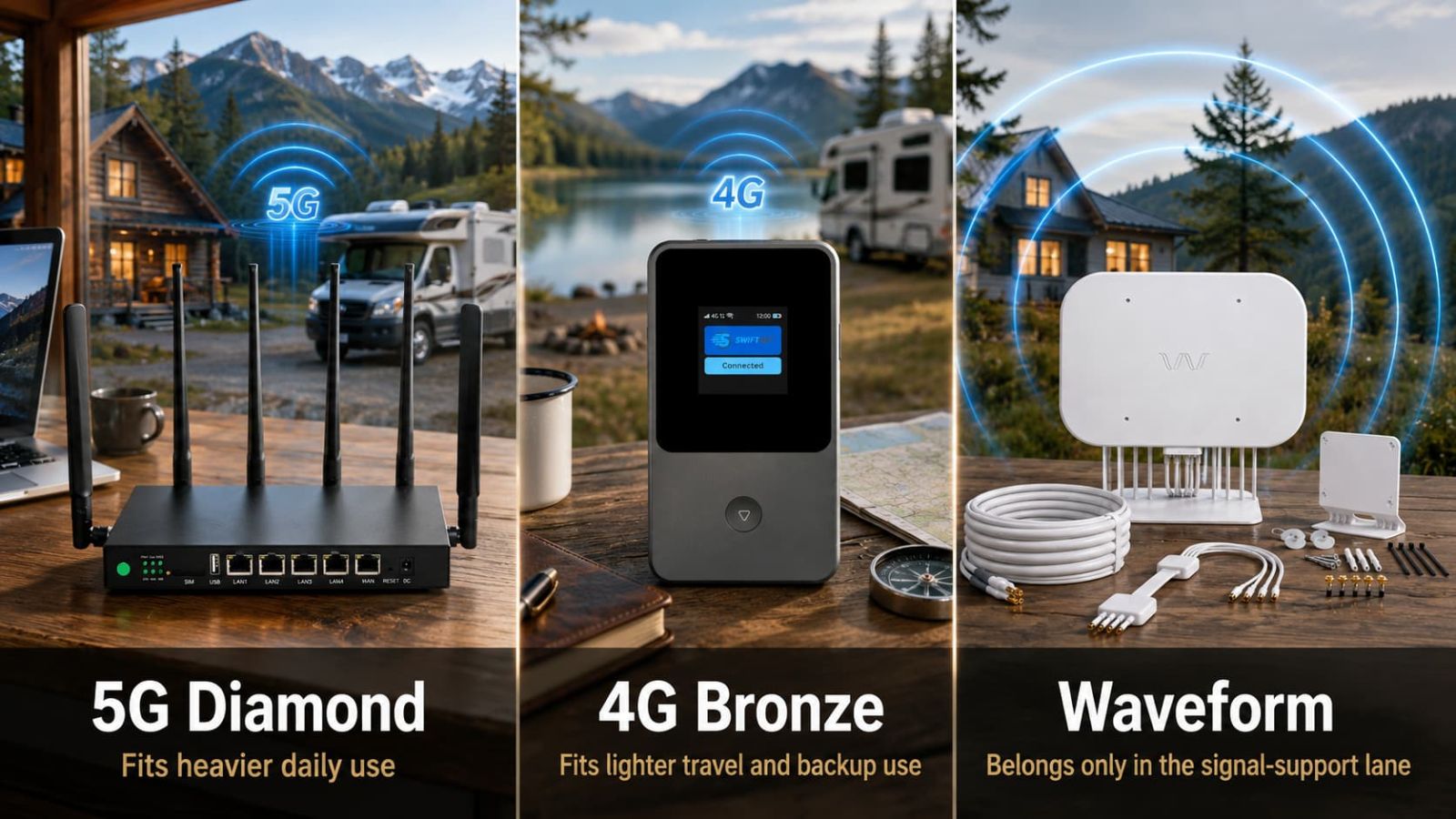
Better if you want a lighter plan path
5G Diamond fits heavier daily use. 4G Bronze fits lighter travel and backup use. Waveform belongs only in the signal-support lane.
Buy SwiftNet if
- ✅ Your location already has workable cellular coverage.
- ✅ You want RV, rural, travel or backup internet without going satellite-first.
- ✅ You can test during the trial window.
- ✅ You will check device cost, shipping, taxes and recurring subtotal.
Skip SwiftNet if
- ✕ Your main location has no usable cellular signal.
- ✕ You camp in remote dead zones most of the time.
- ✕ You need a satellite-first internet strategy.
- ✕ You expect Waveform to create coverage from nothing.
Starlink Is Better When Cellular Coverage Is the Problem
Starlink is the better path when the issue is not plan selection but lack of usable cellular service. If your RV route or rural address sits far away from workable 4G/5G, comparing cellular plans can become an academic hobby with terrible internet.

Better for remote areas
When cellular is weak, inconsistent or unavailable, satellite internet is the path to compare first. That does not make it perfect. It makes it more relevant.

Better if campground WiFi and hotspots keep failing
If cellular hotspots fail because the signal is not there, a stronger cellular plan will not magically fix the physics. Starlink deserves a look first.
Where Both Setups Can Still Disappoint You
Neither option deserves blind trust. Internet buyers love simple answers. Coverage maps and rural terrain enjoy ruining those answers.
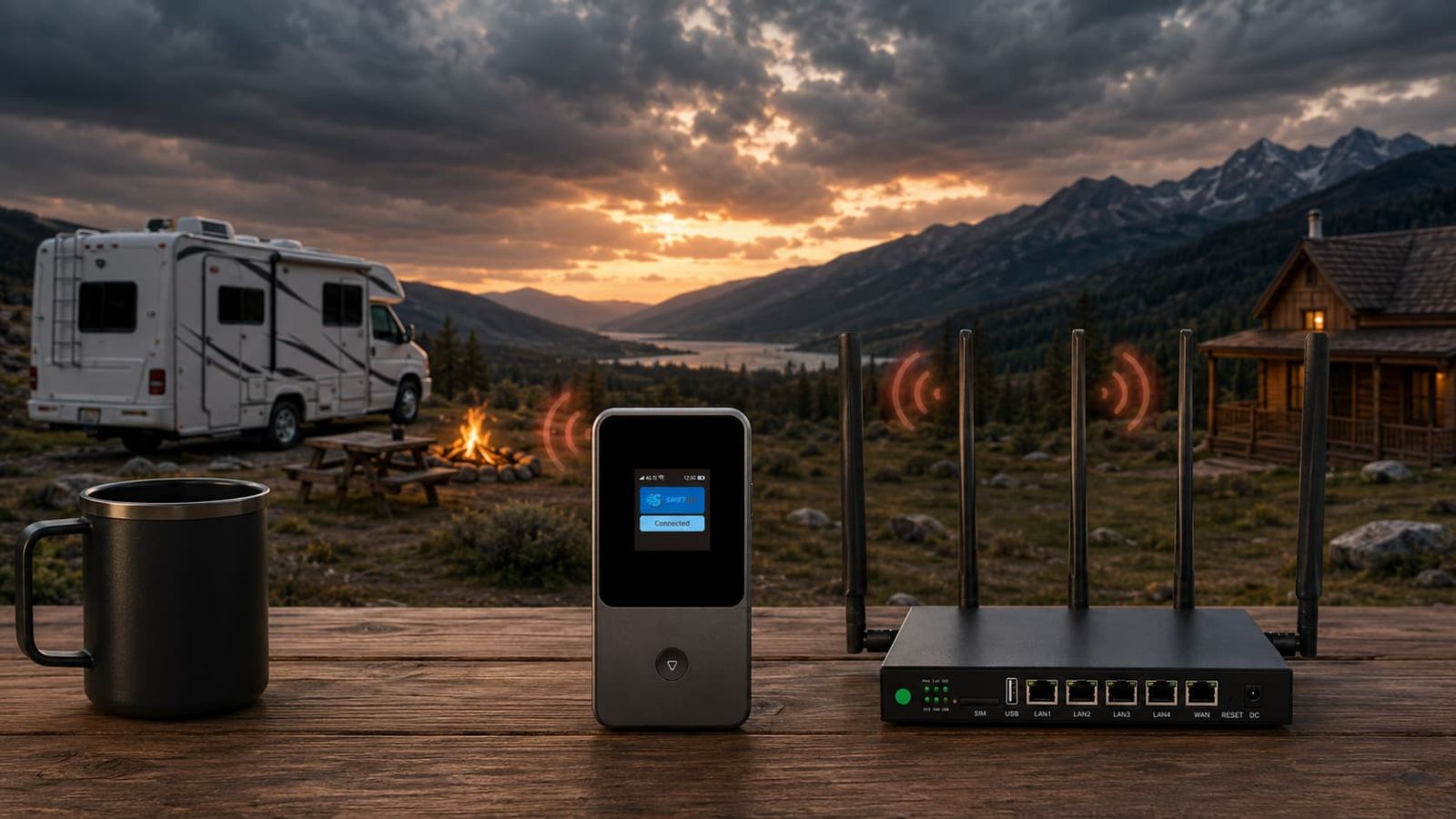
SwiftNet depends on cellular coverage
A cellular plan cannot create usable service where there is none. Test it where you travel, park, call, upload and actually need internet.

Starlink is not friction-free either
Check equipment, setup conditions, sky view, power needs, service availability and current plan details before assuming satellite solves everything.
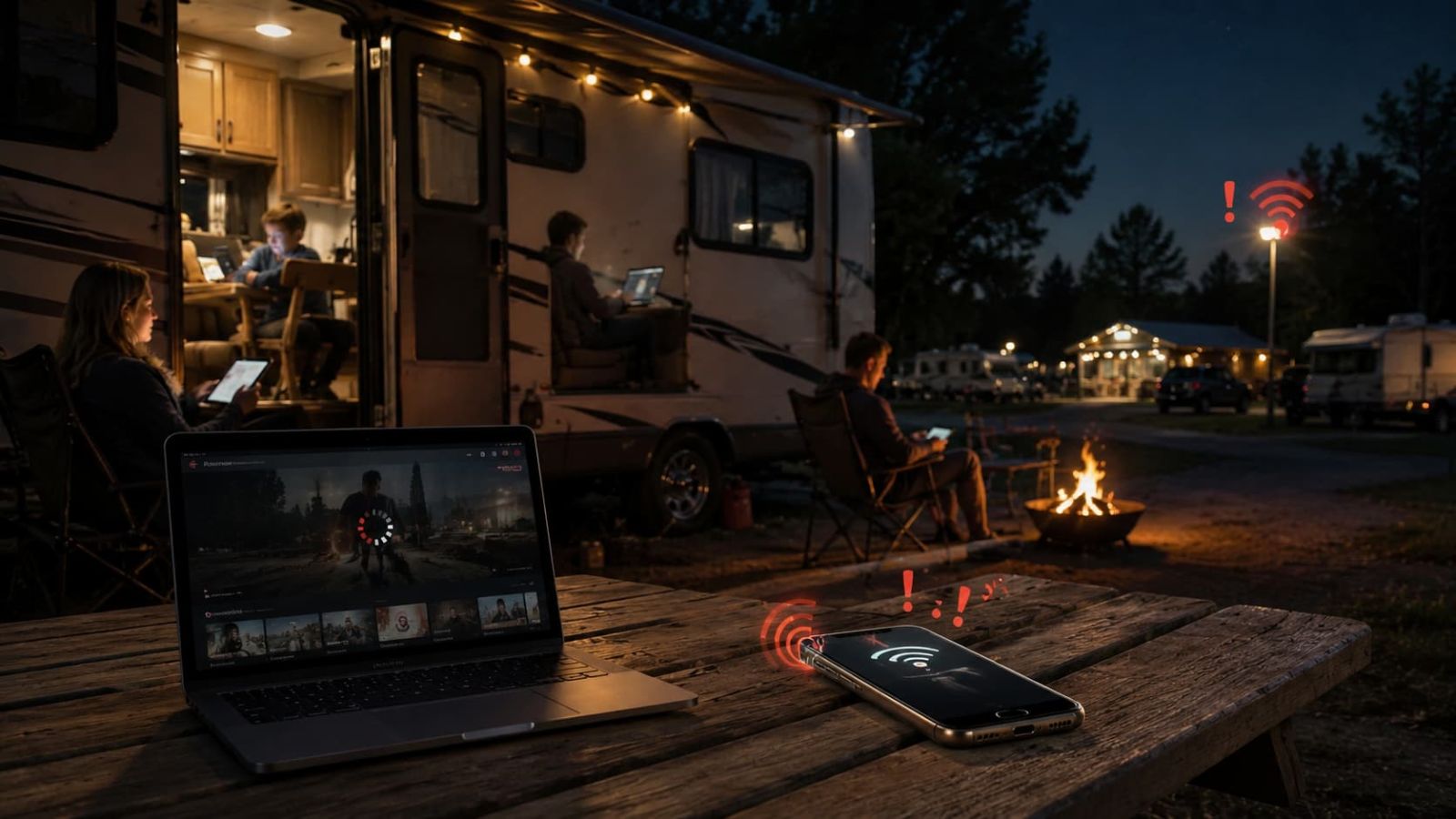
Cheap backup paths can be enough, until they are not
Phone hotspots and campground WiFi can work for light use. They are less dependable when your day includes work calls, uploads or everyone streaming at night.
Price Should Follow Fit, Not Lead It
For SwiftNet, ORION04 is worth trying after the setup makes sense. For Starlink, check current equipment, plan availability and monthly cost directly before comparing. Prices change; a wrong setup stays wrong with excellent consistency.
For heavier cellular internet
Check this first if cellular coverage works and your use case is RV living, rural home internet, remote work, calls or streaming.
For lighter travel internet
Check this if your use case is camping, maps, email, messages and backup browsing.
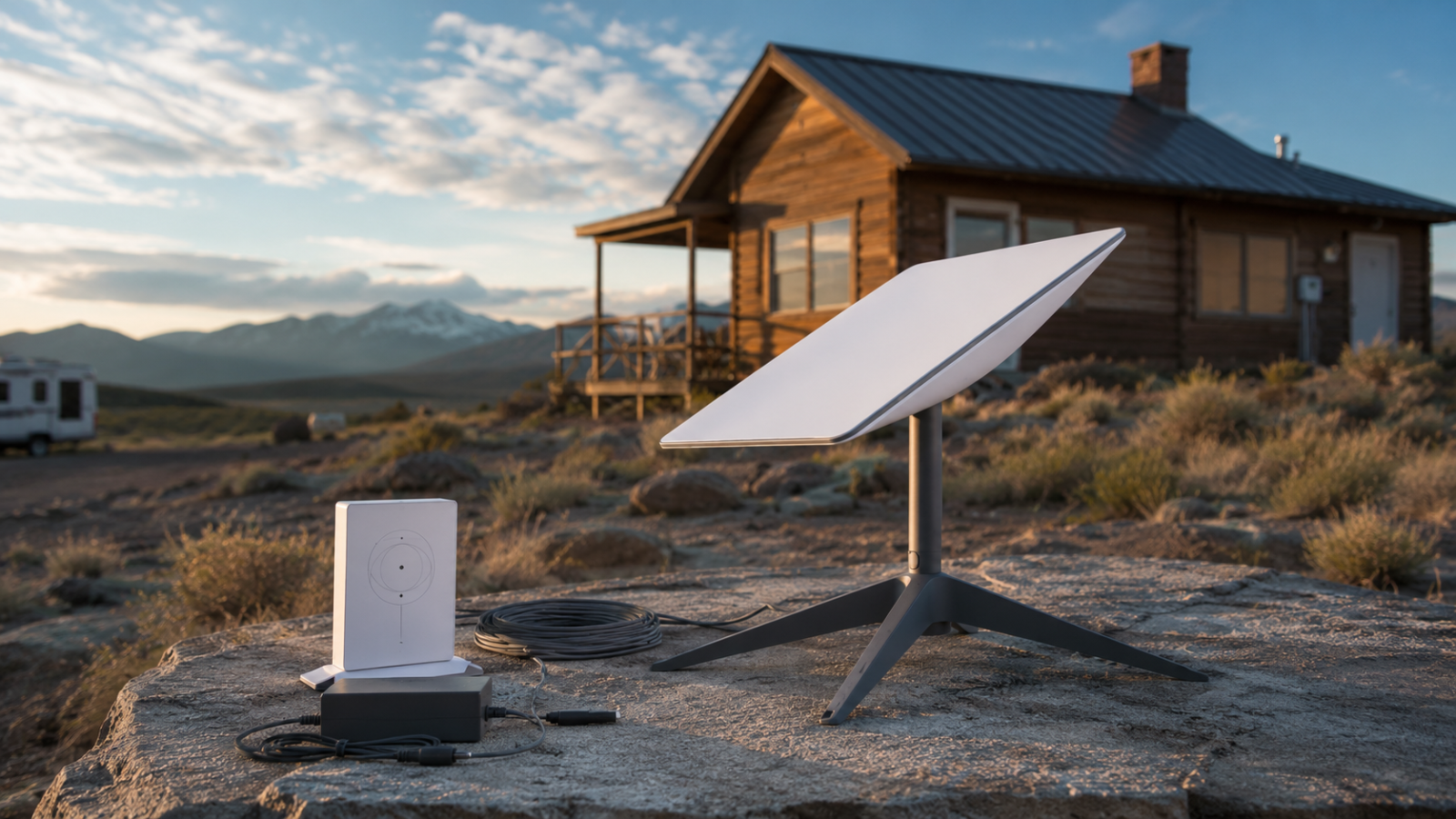
For satellite-first needs
Check current equipment, plan, service availability, setup conditions and monthly cost before deciding.
SwiftNet WiFi vs Starlink FAQ
Choose Starlink for cellular dead zones. Choose SwiftNet when cellular coverage already works.
If you camp or live far from reliable cellular coverage, Starlink is the better path to compare first. If your real location already has usable 4G or 5G signal, SwiftNet WiFi is the more practical cellular setup to check, especially 5G Diamond for heavier daily use or 4G Bronze for lighter travel and backup browsing.
The cleanest decision is boring but profitable: check coverage first, choose the technology path second, then compare prices and coupon savings third. Doing it backwards is how people buy the wrong internet with confidence, a classic human achievement.