SwiftNet coverage should buy you freedom, not another reason to plan life around public WiFi. The useful setup depends on where the signal reaches, whether the connection belongs to a living space or a traveler, and whether the structure around the router is weakening otherwise usable cellular service.
 by Nguyen Dinh · Last checked September 4, 2026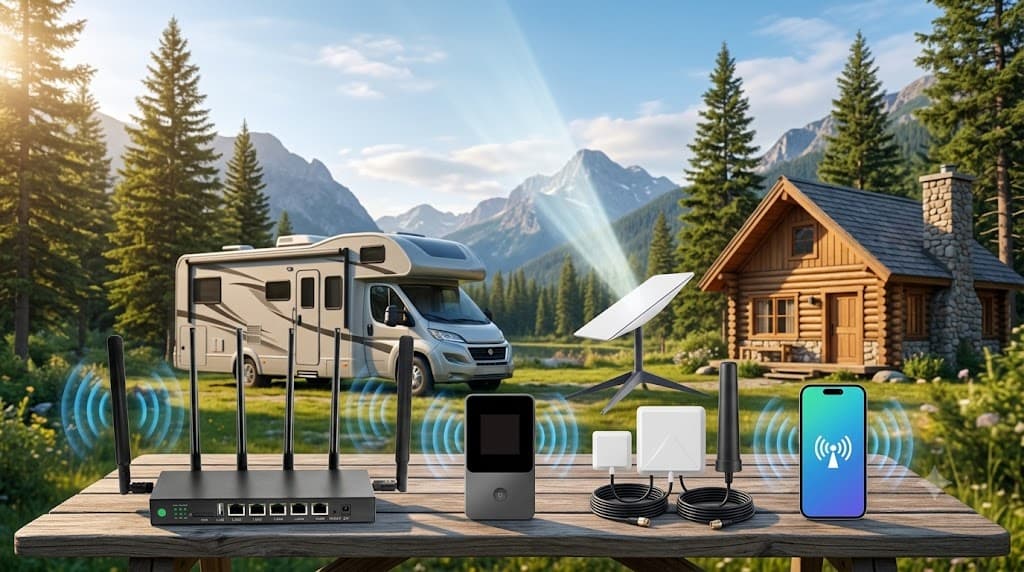
Quick verdict
SwiftNet WiFi Coverage Guide: The Short Answer
Choose 5G Diamond when the connection belongs to the RV or rural home and must remain ready for work, television, music, calls and several household devices. Choose 4G Bronze when private internet needs to leave with one person for travel days, errands, route planning or a laptop session away from the home base.
These are not automatically competing purchases. A Diamond router can keep the living space online while Bronze travels with a family member. The household avoids dismantling its main network, and the traveler avoids relying on a phone hotspot or whatever shared WiFi happens to be available.
Choose SwiftNet if:
- Better stops matter: usable cellular service lets you prioritize scenery, timing or privacy instead of booking solely around campground WiFi.
- The RV functions as a living space: Diamond gives recurring household activity a dedicated local network.
- The connection must travel: Bronze keeps personal access available between stops without borrowing the home-base connection.
- Outdoor reception is better than indoor reception: compatible Waveform hardware may improve the path into the router.
Choose another path if:
- The important location has no usable cellular service: compare satellite for that destination.
- Reliable cable or fiber already reaches a fixed home: wired service may solve the stationary job more directly.
Exclusive SwiftNet WiFi Coupon Code
Choose the coverage path and product role first. When the setup fits, use ORION04 for an extra $20 off eligible SwiftNet plan orders at the initial checkout. The regular recurring monthly charge still applies.

Use ORION04 at the initial checkout after selecting an eligible plan. Confirm the current offer and eligibility on the Store page.
Terms & Conditions
ORION04 applies to eligible SwiftNet plans at the initial checkout. The regular recurring monthly charge still applies. Eligibility, exclusions and validity may change. Confirm the deduction before payment.
How We Assessed SwiftNet Coverage
This review uses the supplied SwiftNet plan, hardware, carrier-choice, policy and demonstration material. The analysis starts with radio-path fundamentals: exact location, indoor attenuation, tower load, router placement and workload. Video results are treated as evidence from their recorded locations, not as guaranteed performance for another address.
The editorial question is practical: what freedom does each configuration create when the signal conditions are right? That keeps a coverage guide focused on ownership value rather than repeating plan names or temporary prices.
Coverage Is a Location Decision, Not a Map Color
A coverage map describes a region. Your connection operates at one parking pad, one room or one desk. Terrain, distance, trees, metal RV bodywork, coated glass and neighboring structures can change the usable signal within the same campground or rural property.
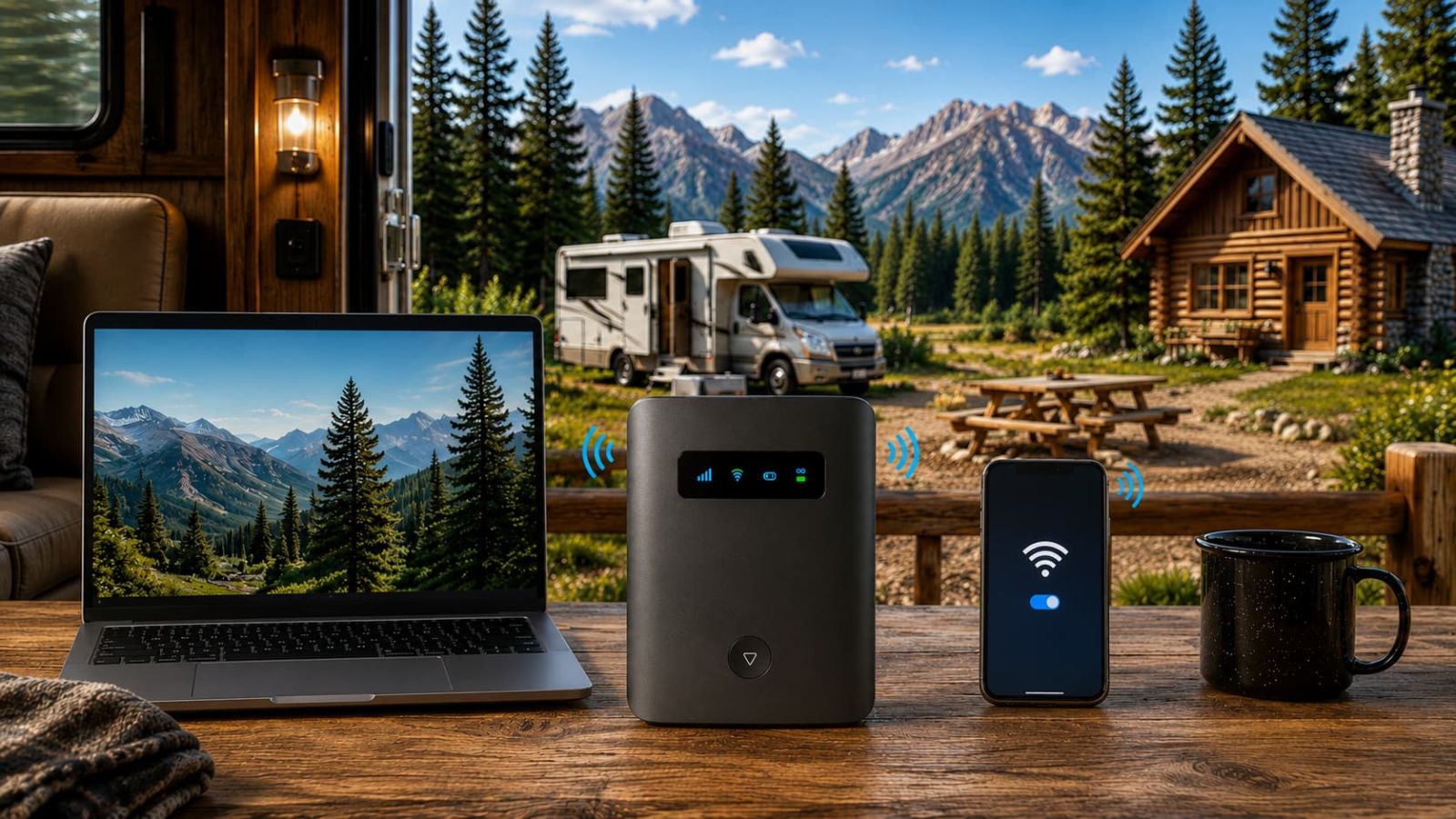
Test where the router or hotspot will actually sit. Compare outside reception, a window-side position and the intended indoor location. If moving the device produces a stable improvement, better placement may solve the problem without adding hardware. The larger gain is repeatability: the network can stay ready instead of sending the household on a signal hunt every evening.
Three Tests That Reveal the Real Buying Path
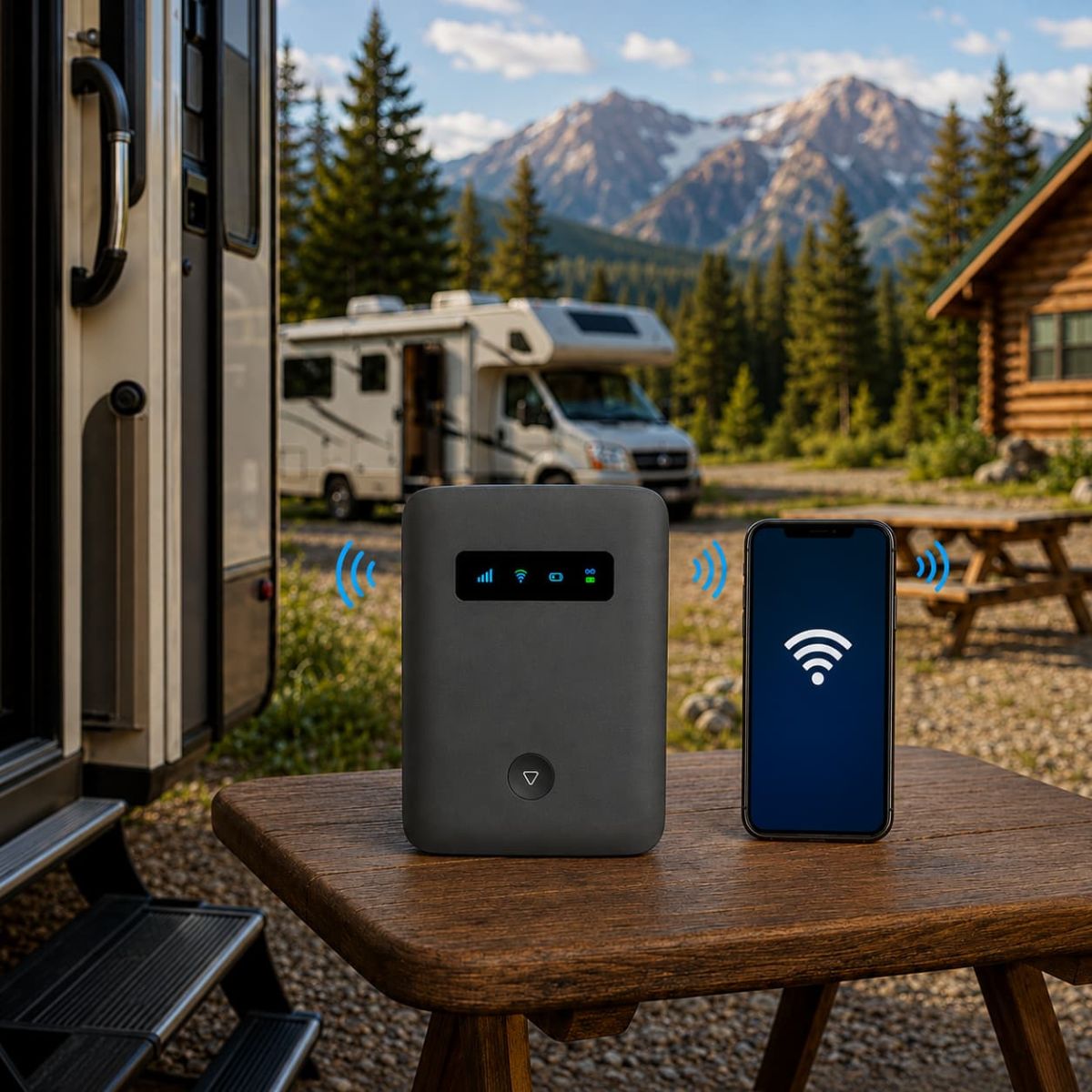
Test the exact operating position
Signal beside the road does not prove reception behind the RV wall or at the rear of a wooded site. Testing the final position shows whether the desired stop can support the desired routine.
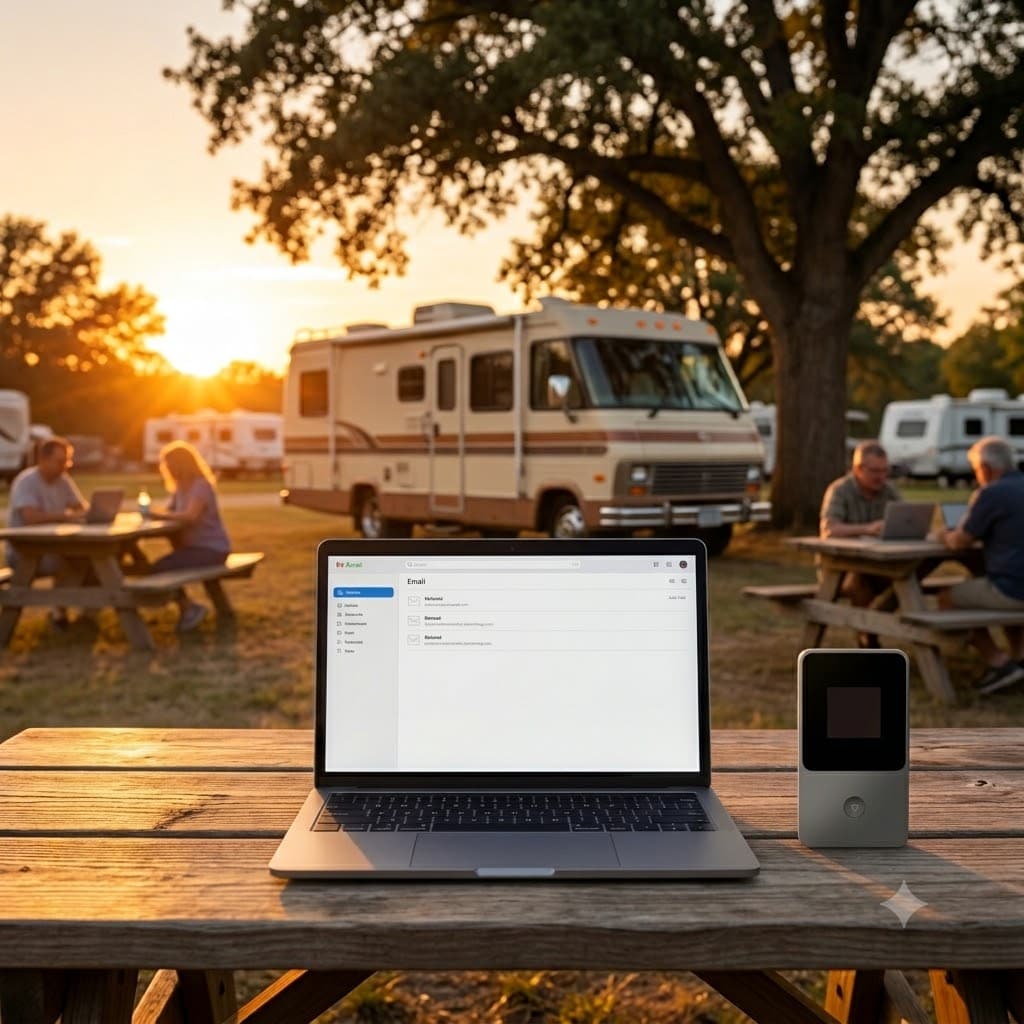
Repeat the test when people are actually online
Shared cellular capacity may feel comfortable at noon and become busier in the evening. Test during meeting hours and family entertainment hours; those are the moments the connection is being purchased to protect.
Test the job, not only the speed-test number
Open the VPN, make the video call, upload the file and run the devices that share the network. A connection becomes valuable when it completes the household’s real work without repeated intervention.
5G Diamond: The Living-Space Network
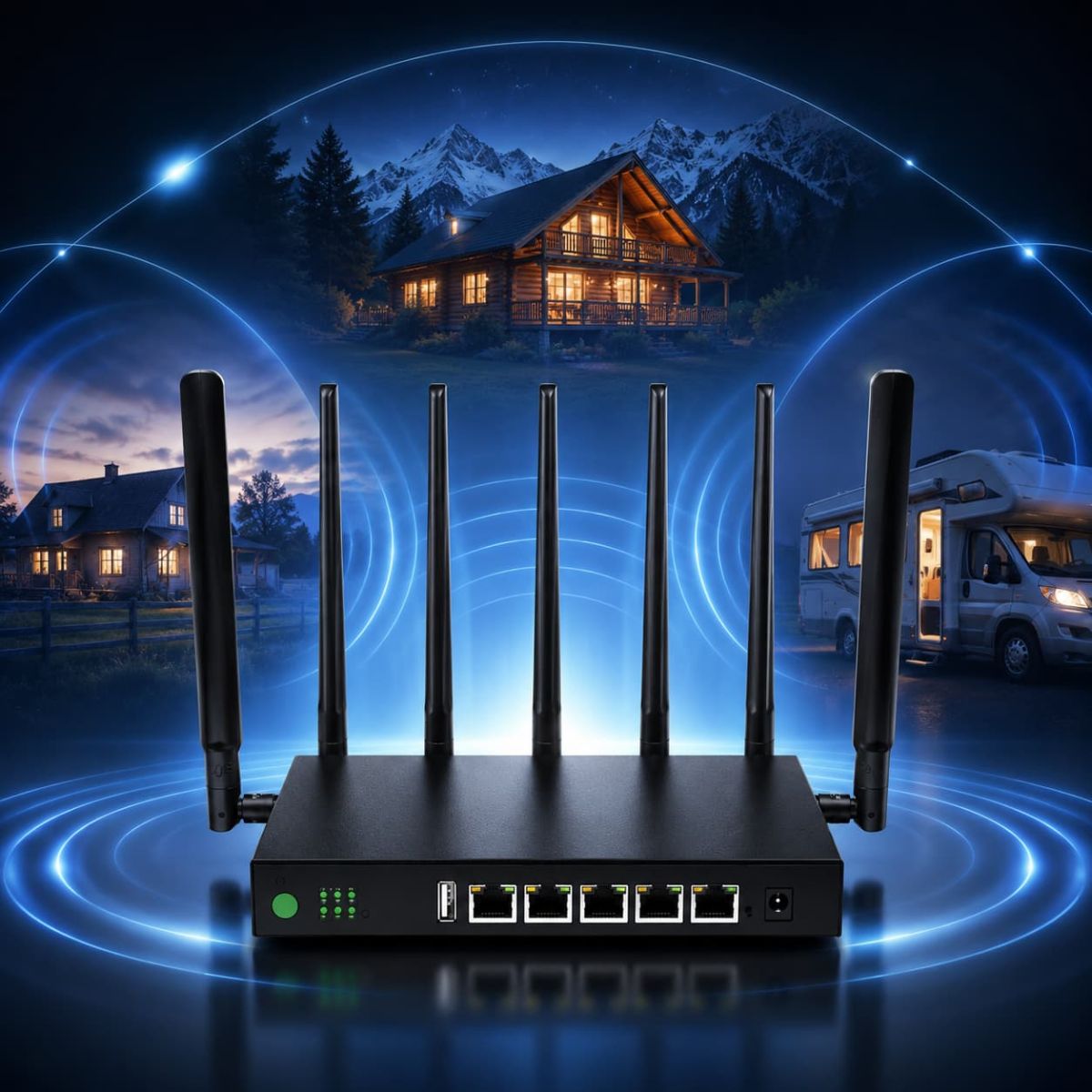
Diamond makes the strongest case when an RV or rural property operates as a home, office and entertainment space. A dedicated router-led network lets laptops remain connected while phones stay available for calls, navigation and authentication. Background sync can continue, family devices can retain their usual network, and a television does not need a hotspot rebuilt around it each night.
Choose Diamond when continuity is the product
The immediate benefit is fewer setup interruptions. The larger benefit is staying longer at the place you chose without automatically searching for a lounge, cafe or shared WiFi whenever work begins.
Check Current DealDiamond earns its place through frequency. When calls, uploads, streaming and several connected devices recur across most days, a network dedicated to the space becomes infrastructure rather than an occasional accessory.
4G Bronze: The Connection That Follows the Traveler
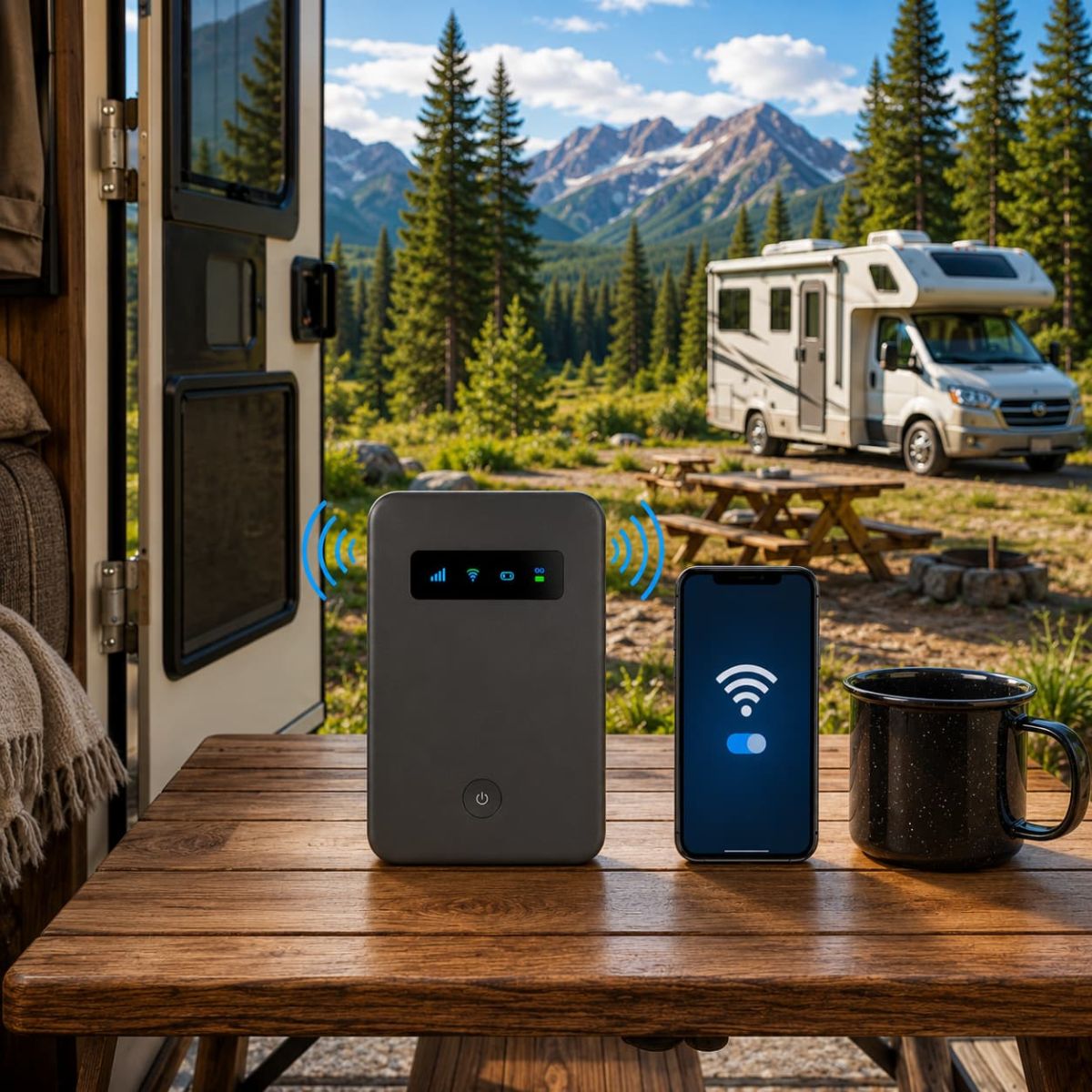
Bronze serves movement. It can keep maps, messages, email and a laptop session available at a trailhead, roadside stop, campsite or day destination without making public WiFi part of the itinerary. That changes more than convenience: a traveler can stop where the day makes sense, check work when needed and keep entertainment available after leaving the RV.
.png)
Choose Bronze when portability creates the value
Its mission is personal access between locations. It avoids turning a phone into the permanent network and gives one traveler connectivity without taking the household router apart.
Check Current DealBronze becomes more valuable beside Diamond, not less. The home-base network keeps working while one person carries a separate connection away. That is a functional pair: one protects continuity inside the space; the other protects freedom outside it.
Waveform QuadMini: Improve the Path Into Compatible Equipment
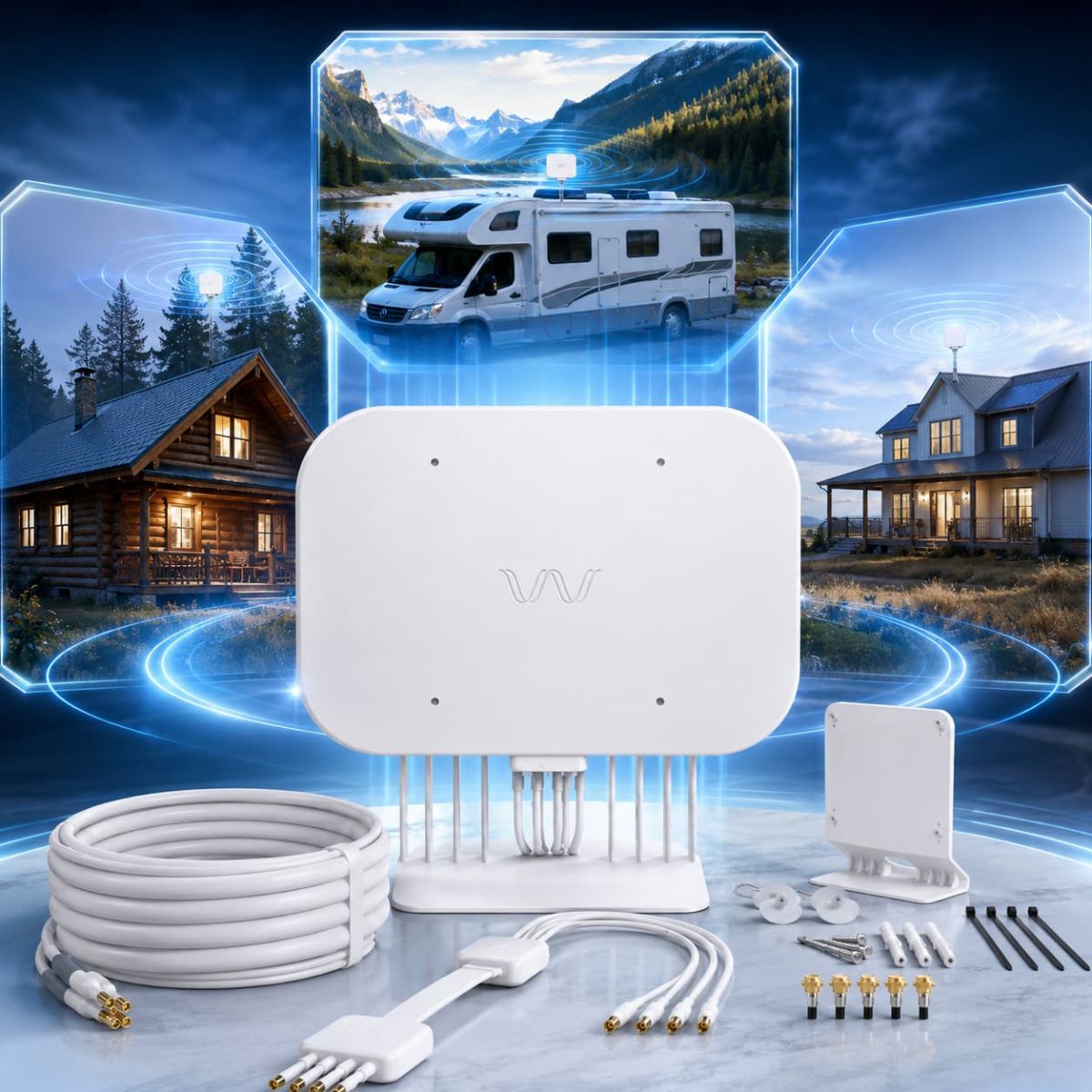
Waveform is signal-support hardware rather than a third internet plan. Its role begins when usable service exists outside but the building shell, coated glass or final router position weakens reception indoors.
Choose Waveform for a confirmed reception-path problem
A compatible external antenna moves the receiving element to a cleaner position and carries that opportunity to the router. This can reduce dependence on a lucky window or an awkward temporary placement.
Check Current DealConfirm outdoor service, device ports, cable routing and mounting requirements first. An antenna can improve a signal path; a true cellular dead zone calls for a different access technology.
When Diamond and Bronze Make More Sense Together
The RV network stays intact
Work, music, television and family devices remain attached to Diamond. Nobody has to disconnect the household because one person needs internet elsewhere.
The traveler gains an independent connection
Bronze can leave for a hike, service appointment, roadside pause or work session. The phone remains available for communication and navigation instead of becoming the only gateway.
The pair removes two different constraints
Diamond removes repeated network setup from the living space. Bronze removes dependence on that living space. Buy both only when these two situations recur often enough to justify two assigned jobs.
Setup and Speed-Test Evidence
SwiftNet 5G Diamond Router Setup Guide & Live Speed Test (30% OFF!)
Use the walkthrough to understand installation flow and the type of result produced at the recorded location. Repeat the meaningful workloads at your own address during the trial.
How to Activate SwiftNet 4G Bronze Hotspot Portable Internet for Travelers
This is the practical activation reference for the portable hotspot. Test it where portability is supposed to improve the trip, not only where activation is easiest.
SwiftNet 5G Diamond Speed Test – Ultimate Internet for RV & Rural Living
Treat the result as location-specific evidence. Carrier conditions, tower load, placement and time of day can change performance at another RV site or rural address.
What to Confirm Before Ordering
- Exact location: test the parking pad, room or work position rather than the nearest town.
- Indoor versus outdoor reception: use the difference to separate a placement problem from a coverage problem.
- Busy-hour behavior: repeat calls, uploads and entertainment during the hours that carry the most value.
- Product role: Diamond for the space, Bronze for the traveler, Waveform for compatible signal support.
- Commercial terms: check the current Store page for price, code eligibility, recurring charge and policy details.
Current SwiftNet WiFi Offers
Prices, markdowns and availability can change while the coverage logic stays the same. CandidCodes keeps those changing details on one page so this guide can remain useful without turning every product explanation into a temporary deal notice.
When Another Internet Path Fits the Location Better
A recurring destination with no usable cellular service is not a Diamond-versus-Bronze decision. Compare satellite for that stop. A fixed property already served by reliable cable or fiber may also receive a more direct stationary solution from wired broadband.
That does not remove SwiftNet from a mixed travel system. Cellular service may remain the more portable option along routes and at destinations where coverage exists, while satellite or wired service handles the places built around a different infrastructure.
Final Verdict
Choose the architecture before the plan. Diamond should anchor the RV or rural living space. Bronze should travel with the person. Waveform should address a confirmed, compatible reception path. When Diamond and Bronze solve recurring jobs at the same time, owning both can create more freedom than forcing one device to serve two routines.
Compare the current SwiftNet configurations and check code ORION04.
SwiftNet WiFi Coverage FAQs
How should I check coverage before buying?
Test the exact operating position, compare indoor and outdoor reception, and repeat the real workload during the hours when the connection matters.
Should I choose Diamond or Bronze?
Choose Diamond for a persistent living-space network. Choose Bronze when internet needs to follow a traveler. Use both when the household network must remain online while someone leaves with separate portable access.
Can Waveform create cellular service in a dead zone?
No. Its useful role is improving the path to compatible equipment where cellular service already exists but reaches the indoor router poorly.
Where should I check current pricing and policy details?
Use the SwiftNet Wifi Store page for current offers, ORION04 eligibility and changing commercial terms.

CandidCodes may earn a commission from purchases made through sponsored links in this article. Affiliate Disclosure. This does not change the price you pay. Specifications, coupon eligibility, stock and policies should be confirmed before ordering.