
A phone hotspot is the best free-ish backup if your internet needs are light. SwiftNet WiFi makes more sense when the connection has to support RV living, rural work, video calls, uploads, streaming or several devices. The useful question is not which one sounds easier. It is which one survives your actual workload.
We may earn a commission when you buy through our links. See our Affiliate Disclosure.
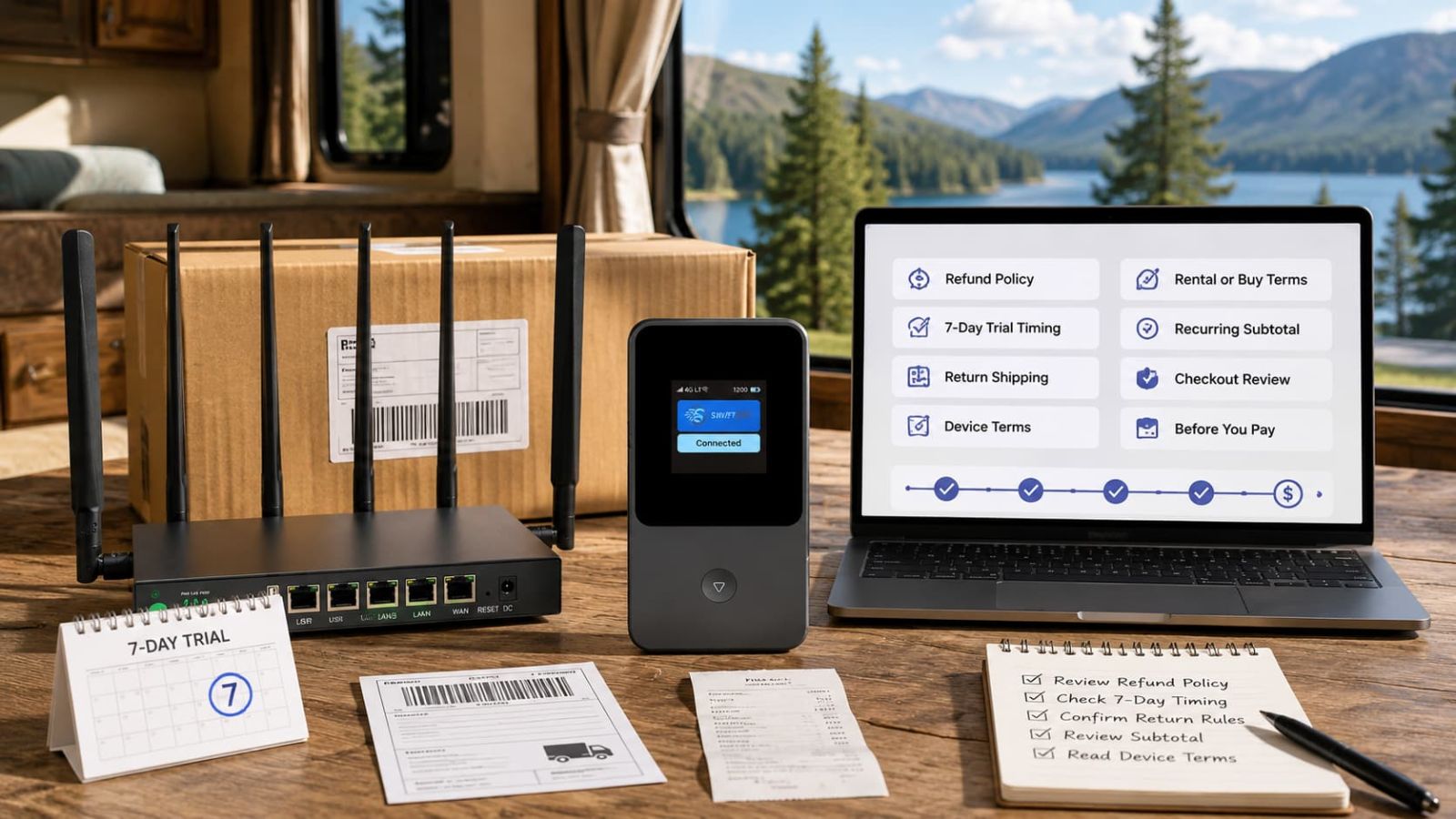
.png "SwiftNet WiFi vs phone hotspot hero comparison for RV and rural internet")
Start with the job, then decide whether the phone is enough.
If you only need maps, messages, email and short browsing, your phone hotspot may be enough. If you need a more dedicated setup for a laptop, calls, uploads, streaming, several devices or rural daily use, SwiftNet is the cleaner path to compare first.
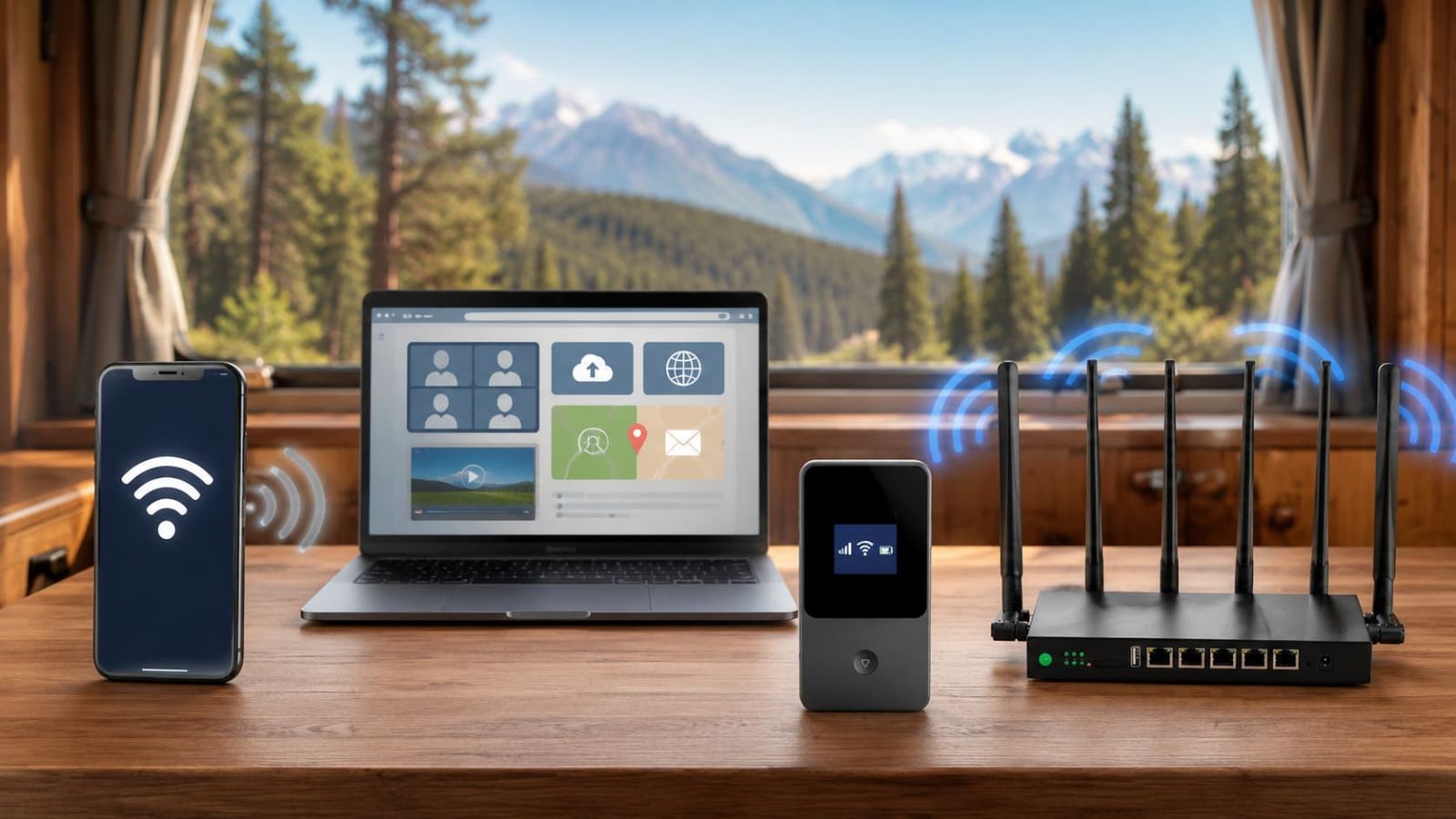
Good fit for bigger internet jobs, not a reason to overbuy.
Phone hotspot stays useful for light backup. SwiftNet becomes easier to justify when work, RV living, uploads or multiple devices make the phone feel like it is doing unpaid labor.
SwiftNet WiFi vs phone hotspot: which portable internet path fits?
This is not a contest between a phone and a magic router. Both still depend on cellular coverage. The difference is workload: a phone hotspot is convenient for light tasks, while a dedicated SwiftNet setup is easier to justify when the job is bigger.
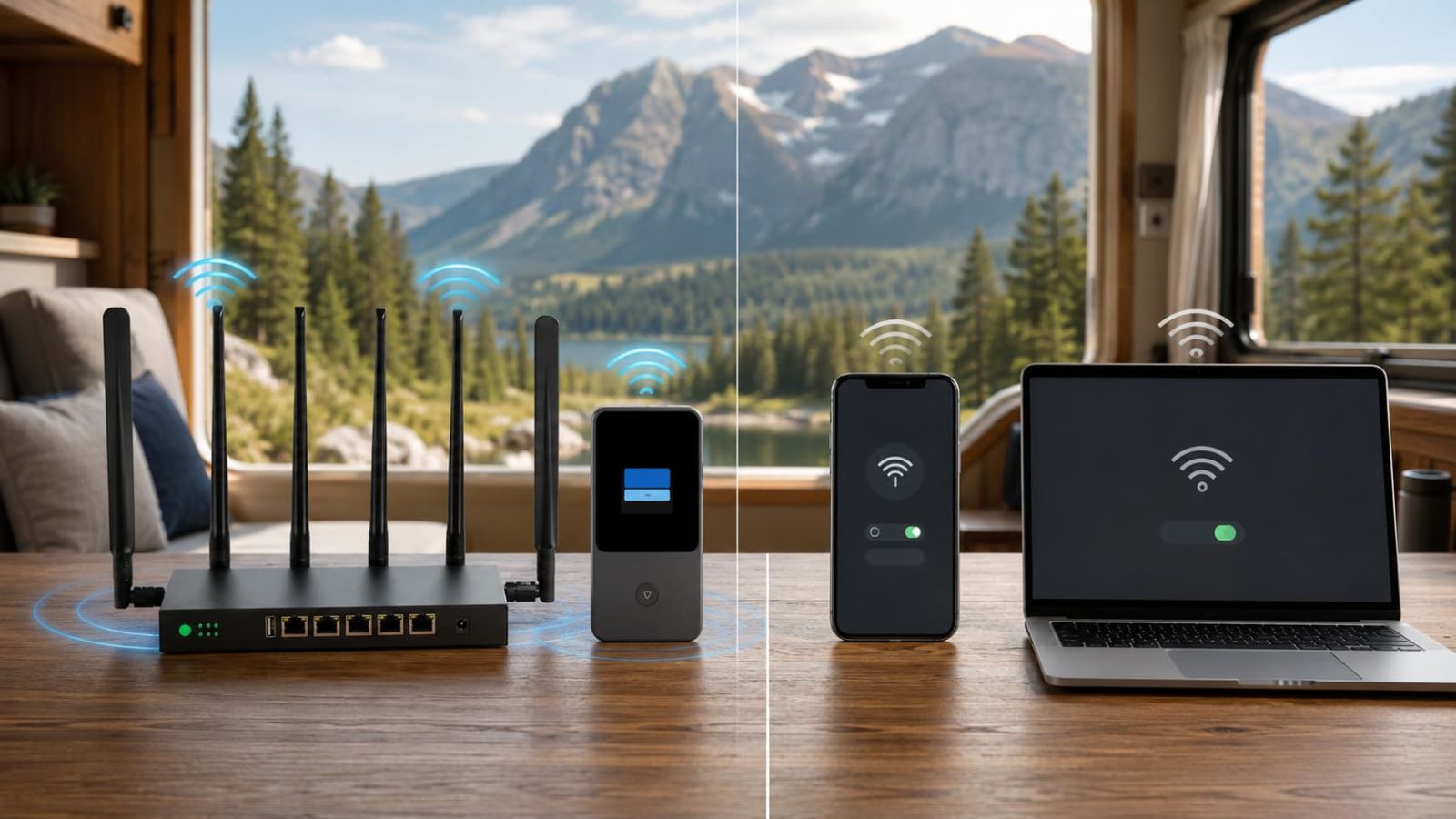
Phone hotspot
You already have it, and the workload is light enough that a separate setup may be more than you need.
SwiftNet 5G Diamond
A dedicated router-style setup is easier to recommend when calls, uploads, laptops and multiple devices matter.
SwiftNet 4G Bronze
It gives you a separate hotspot-style device without asking your phone to be the whole internet system.
SwiftNet WiFi
Phone hotspot can drain battery, heat the phone and compete with normal phone use during longer sessions.
Neither
If the location has no workable cellular signal, compare satellite or another fallback before buying either path.
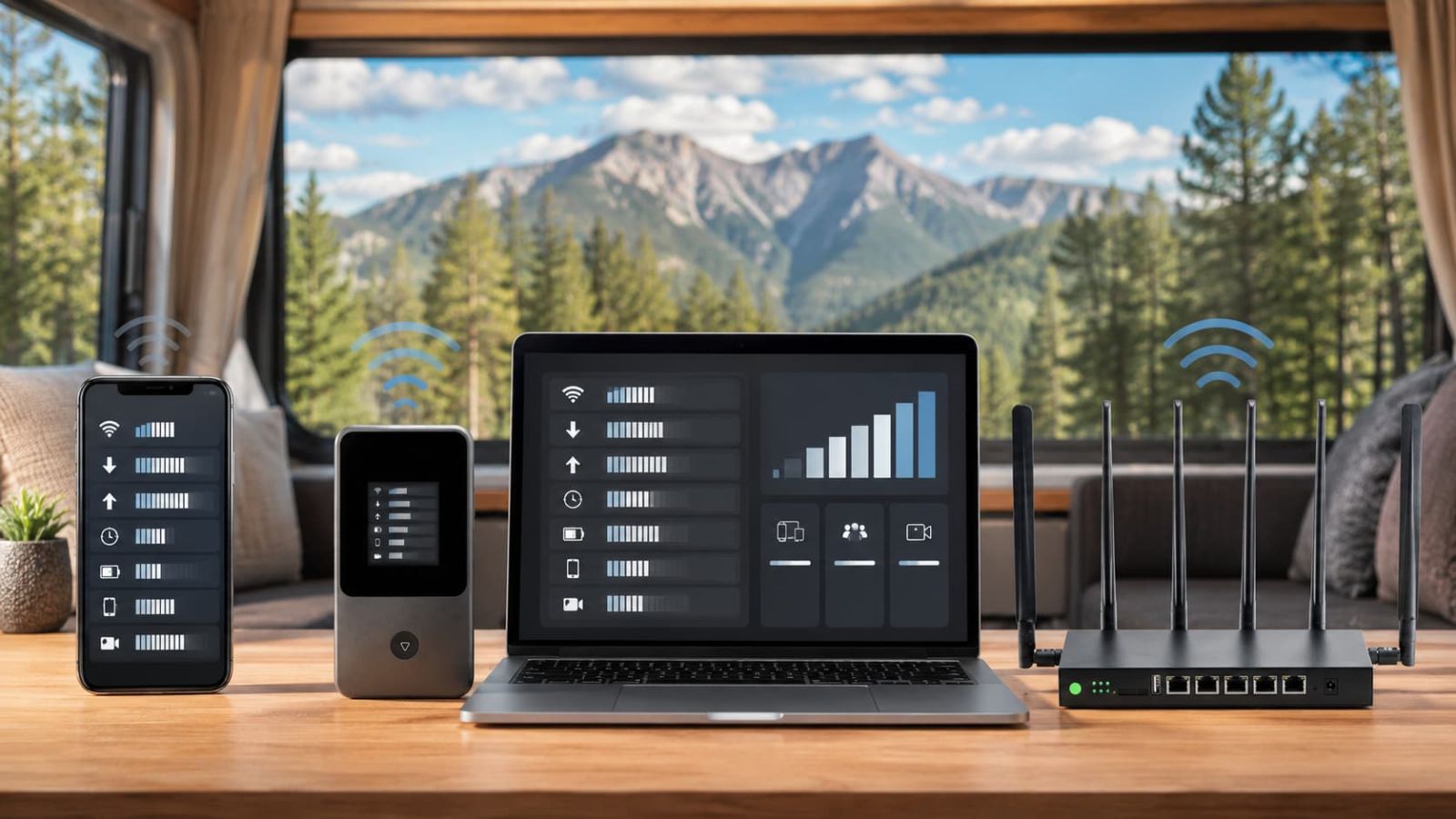
Compare the numbers before asking your phone to act like a router.
Phone hotspot can be convenient, but the real limit is usually not the WiFi icon. It is hotspot allowance, phone battery, heat, device load, throttling and how much work you expect from one pocket device. SwiftNet has the advantage when the job needs a dedicated device lane.
Use this decision tree before you pay for another internet setup.
Price matters after the connection path makes sense. A free hotspot that fails during a work call is not free. It is just unpaid tech support for your own life.
Do you only need maps, email, messages and short browsing?
If yes, start with your phone hotspot. Do not buy another setup because a sales page looked confident.
Do you need daily laptop work, calls, uploads or streaming?
If yes, compare 5G Diamond before asking your phone to do a router's job.
Do you want a cheaper dedicated backup?
If the phone hotspot is too fragile but 5G Diamond is more than you need, compare 4G Bronze.
Is there no usable cellular signal?
Stop comparing phone and SwiftNet. Compare satellite or another non-cellular fallback first.
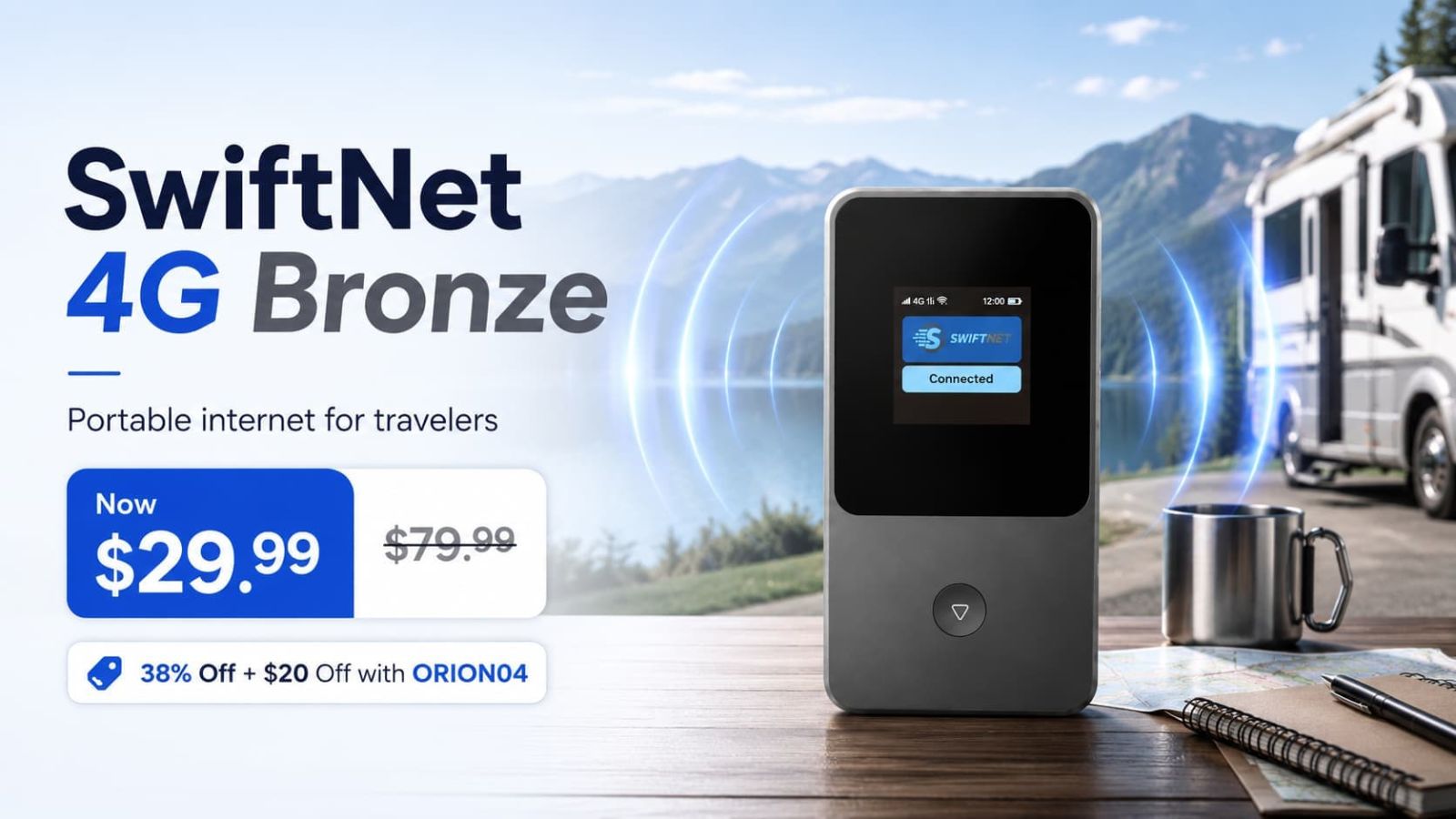
Phone hotspot wins when the job is small and temporary.
The phone hotspot is still the simplest option for quick tasks. It is already in your pocket, it avoids another device, and it can be good enough when the work is light. The trouble starts when you expect it to behave like a dedicated internet setup.
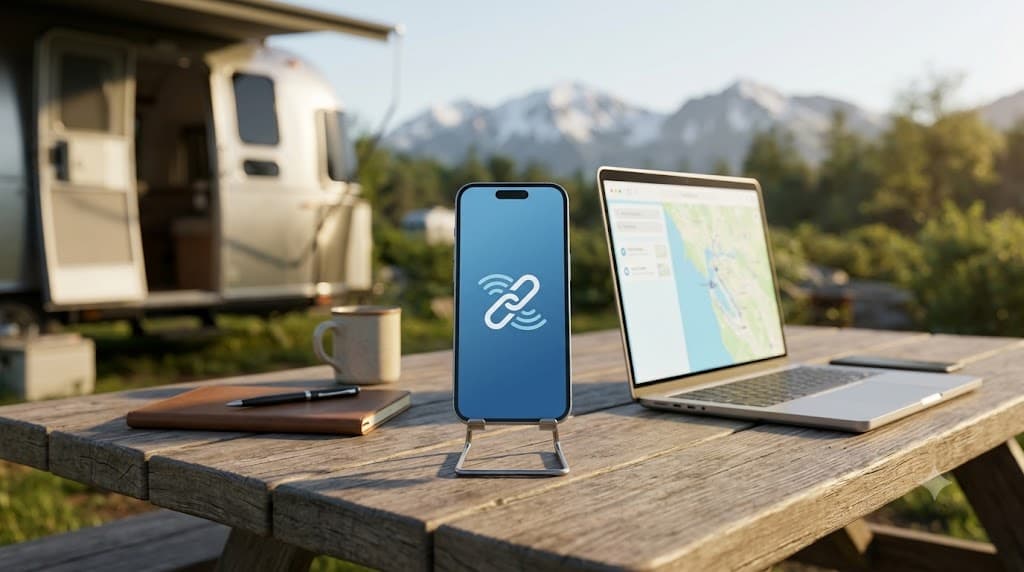
Better for quick backup
Use it for maps, email, messages, quick browsing and short hotel or campground backup sessions.
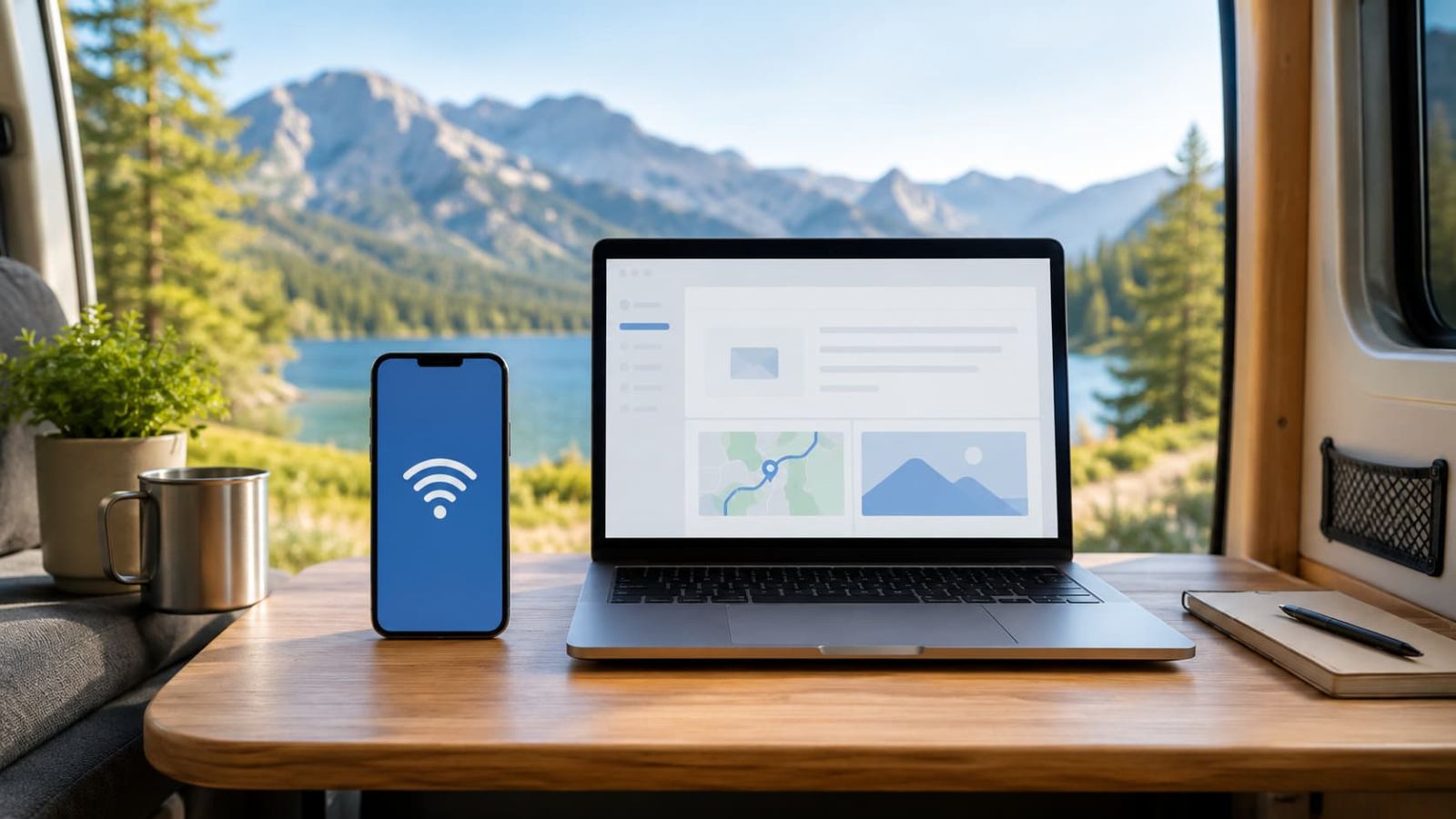
Worse for long sessions
Battery drain, heat, hotspot data limits and multiple devices can turn a free-looking option into a bad workday.
SwiftNet wins when you need a separate internet setup.
SwiftNet is easier to justify when the phone hotspot is no longer a backup and has accidentally become infrastructure. That is a very human way to create a problem.
Better for daily work and rural use
Check 5G Diamond first when the workload includes laptop work, calls, uploads, streaming, RV living or several connected devices.
.png "SwiftNet 4G Bronze dedicated backup hotspot")
Better for dedicated budget backup
Check 4G Bronze when you want a separate hotspot-style device for light travel, camping and backup browsing.
Buy SwiftNet if
- ✅ You need a separate internet device.
- ✅ You use laptops, calls, uploads or several devices.
- ✅ Your phone hotspot hits data, battery or heat limits.
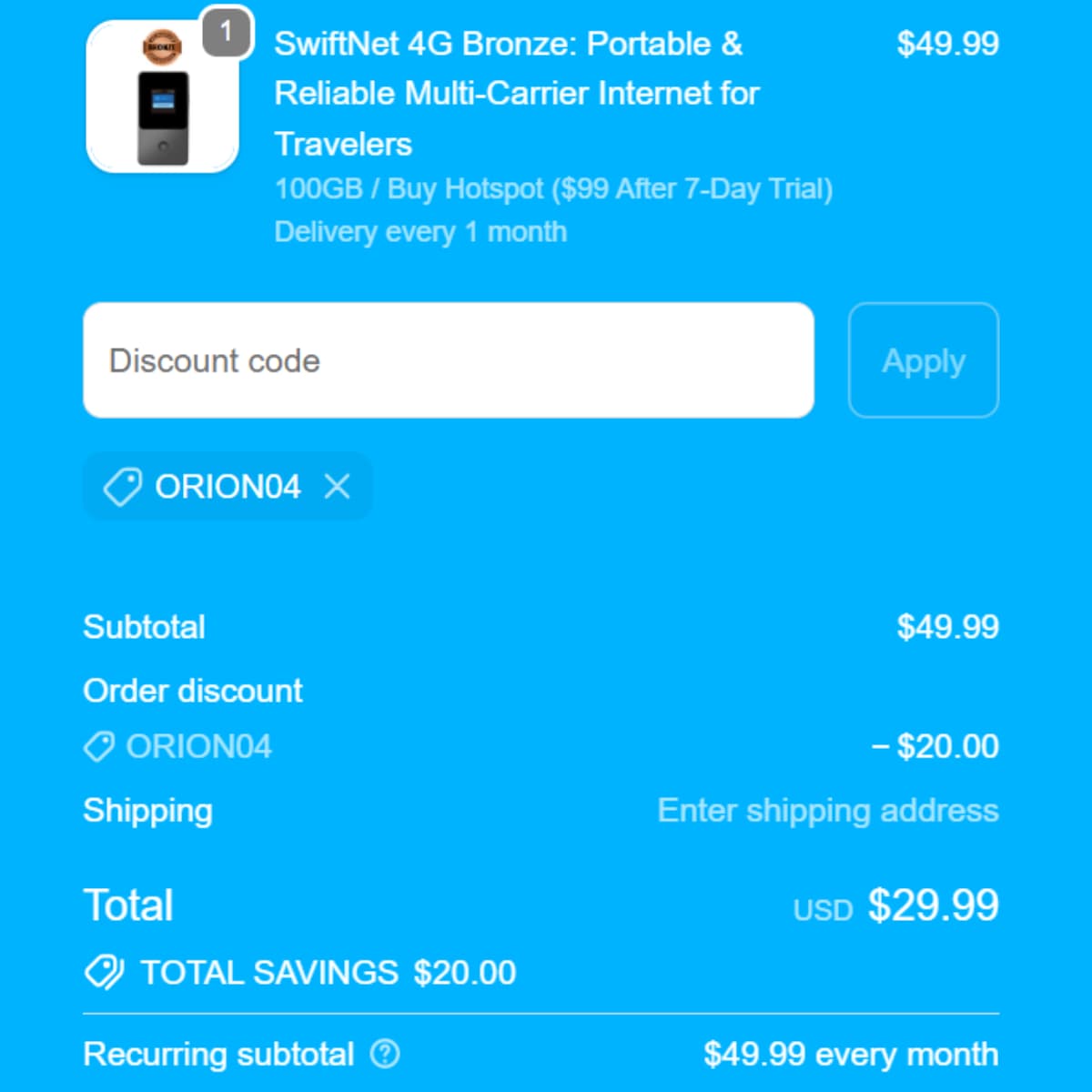
- ✅ You will check ORION04, device terms and recurring subtotal.
Skip SwiftNet if
- ✕ Your phone hotspot already handles the job.
- ✕ You only need light maps, email and messages.
- ✕ Your main location has no usable cellular signal.
- ✕ You do not want another recurring internet cost.
Where both options can still disappoint you
Both paths can work. Both can also make you question your life choices during a meeting. The trick is choosing the weakness you can actually live with.
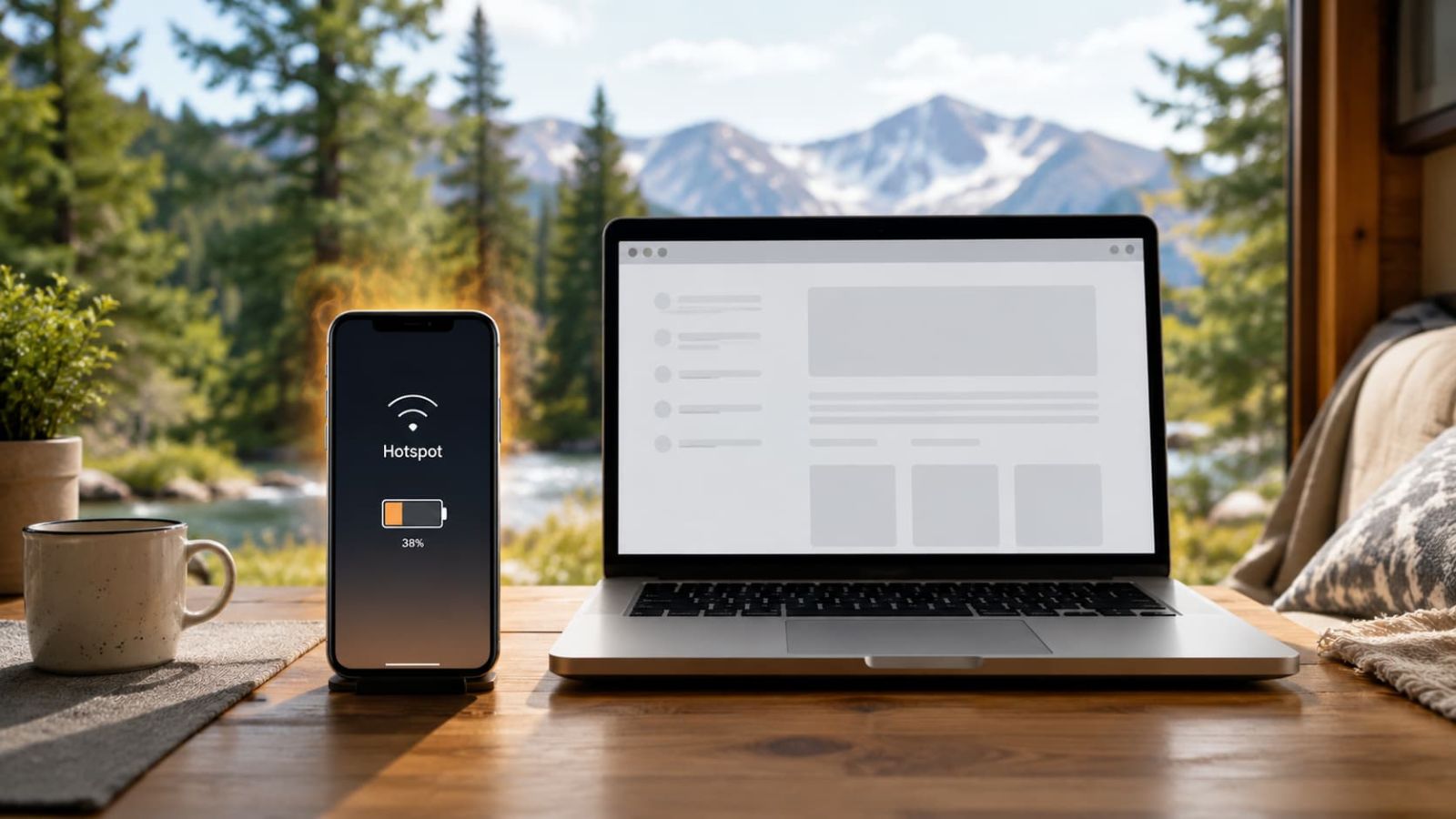
Phone hotspot can get strained
Battery drain, heat, hotspot data limits and sharing the phone with normal use can make it worse for long work sessions.
SwiftNet adds real costs
Check first checkout, recurring subtotal, device rental or purchase, trial timing and refund terms before deciding the dedicated setup is worth it.
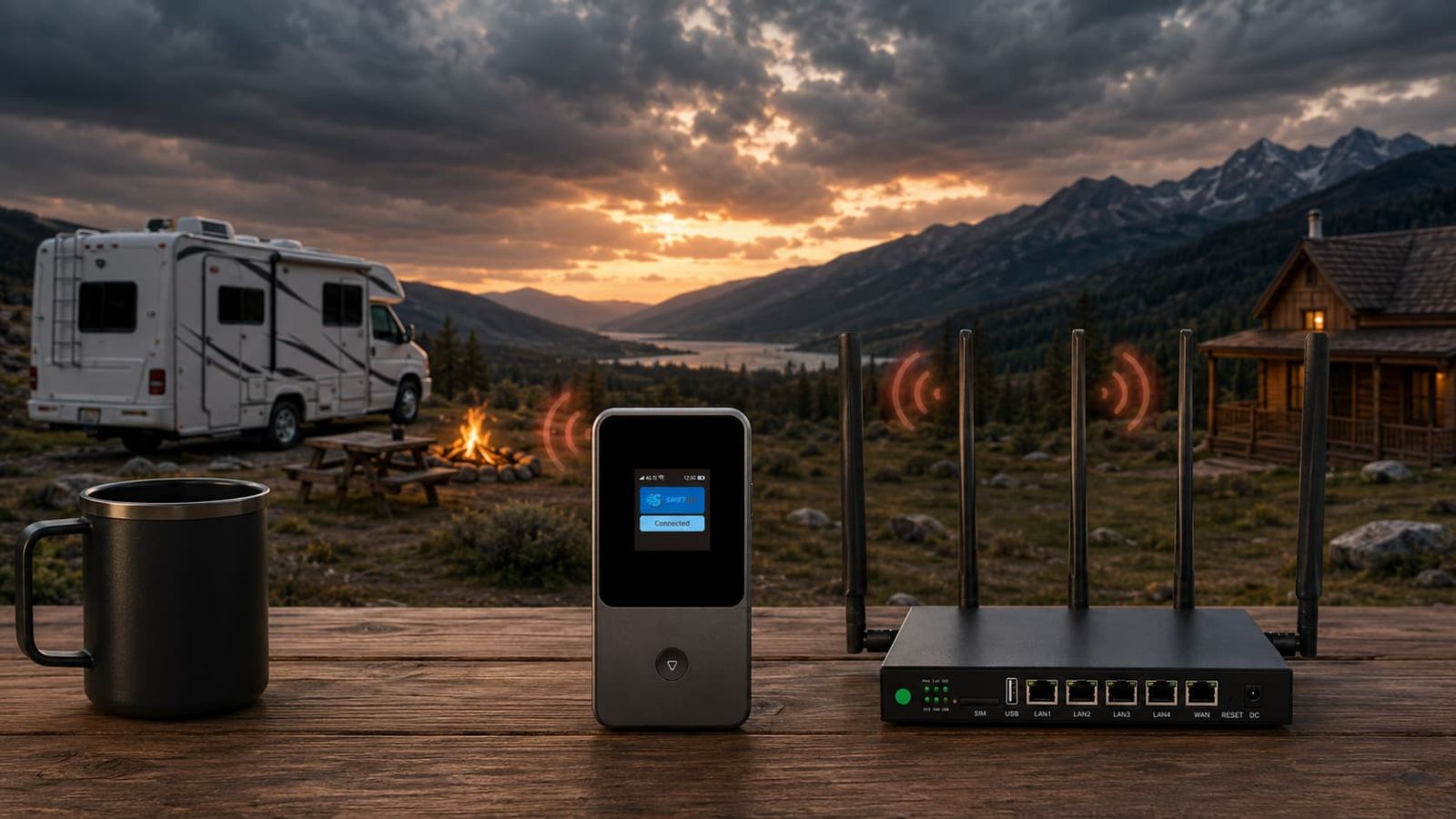
Coverage still decides everything
If there is no usable cellular signal, neither your phone nor SwiftNet deserves blind trust. Compare satellite or another fallback first.
Phone hotspot is free only if it actually works for the job.
Phone hotspot wins the upfront price argument because you already own the phone. SwiftNet only makes sense when the separate setup solves a real problem: heavier workload, backup reliability, battery strain, device load or rural daily use.
Lowest upfront cost
Best when your mobile plan, battery and workload are light enough that a dedicated setup is unnecessary.
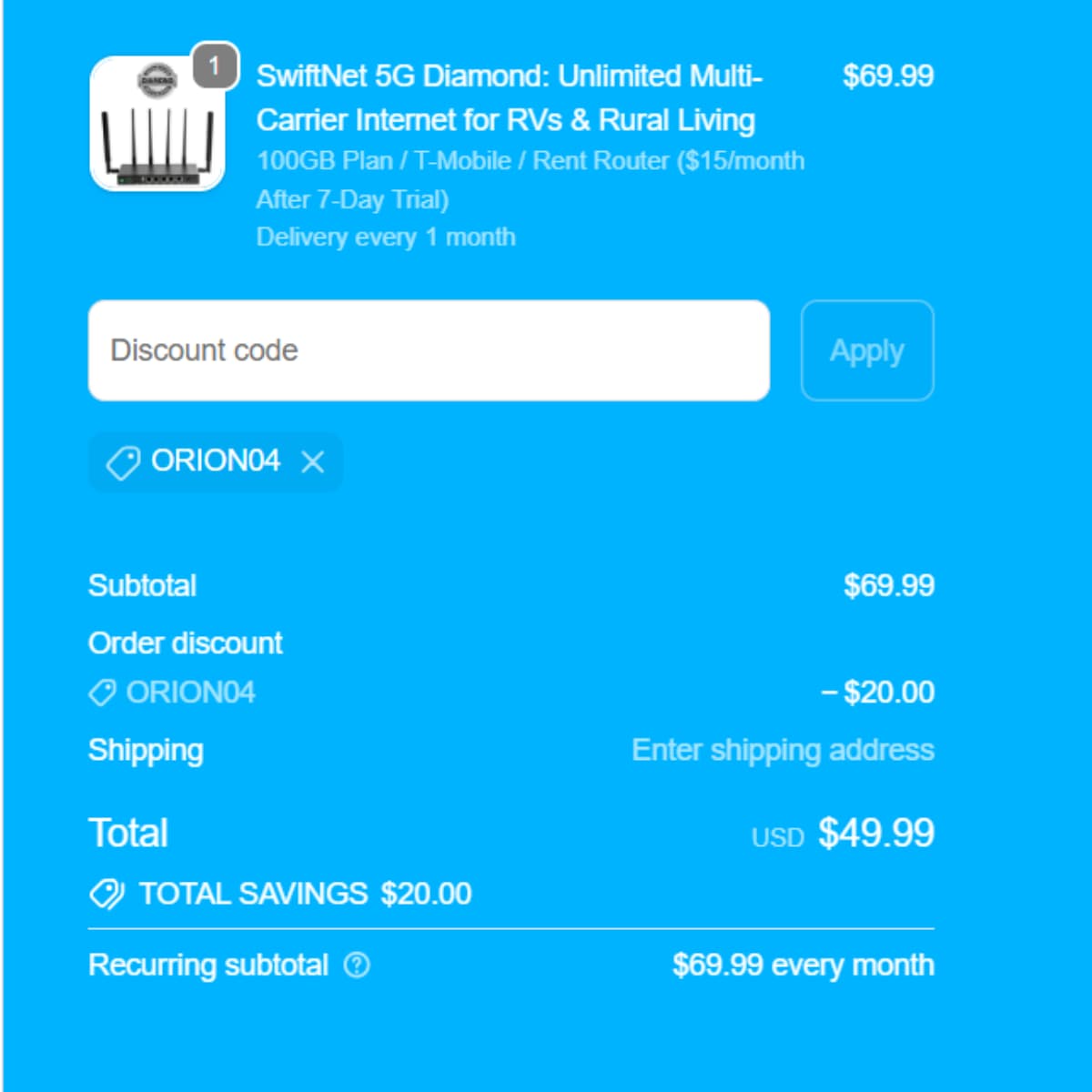
For heavier internet
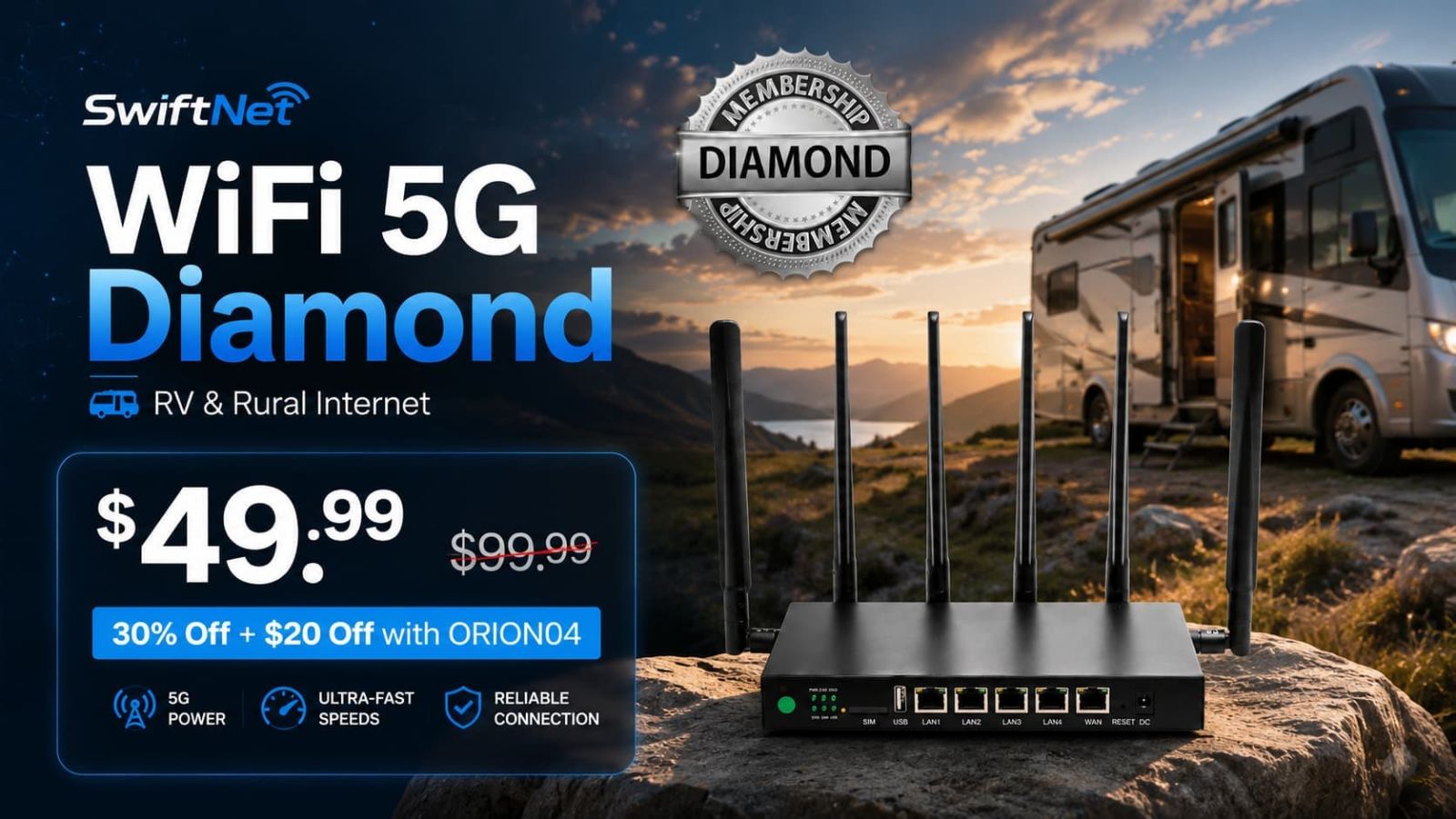
ORION04 can lower checked first checkout to $49.99 if eligible, but recurring subtotal and device terms still matter.
For cheaper dedicated backup
ORION04 can lower checked first checkout to $29.99 if eligible, but use it only if the lighter workload fits.
SwiftNet WiFi vs Phone Hotspot FAQ
Keep the phone hotspot for light backup. Choose SwiftNet when the internet job gets bigger.
A phone hotspot is still the cheapest and simplest choice for light travel tasks. SwiftNet is easier to justify when you need a dedicated setup for rural work, RV living, video calls, uploads, streaming or several devices. Start with coverage, choose the workload, then use ORION04 if SwiftNet still fits.