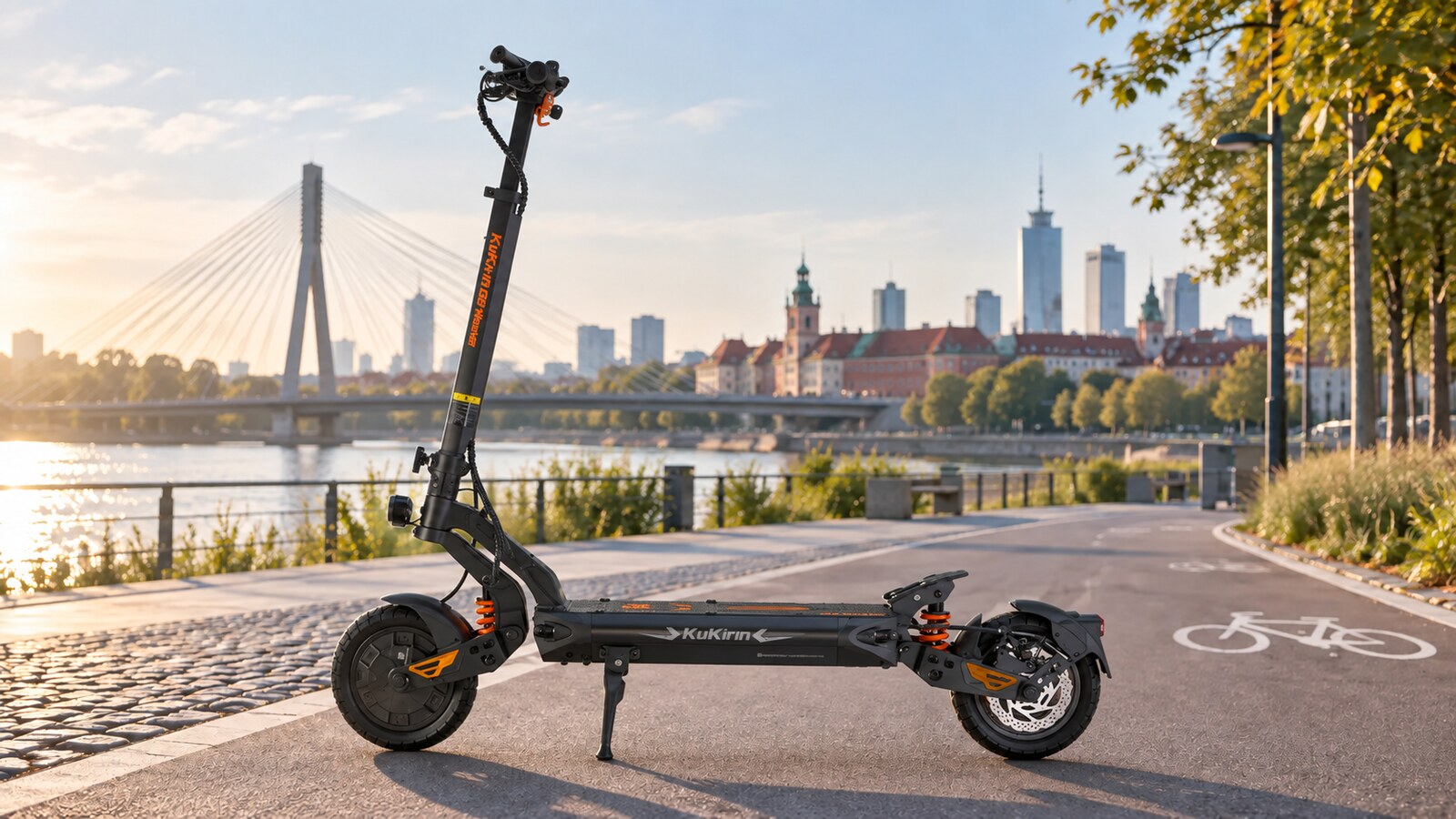
KuKirin G2 Master is built for riders who already know where a single motor becomes the constraint. Two 1000W brushless motors, a 52V 20.8Ah battery and a listed maximum speed of 60 km/h move it beyond the G2 and G2 Max commuter hierarchy into a heavier performance platform.
Its strongest value is not the ability to post the largest number in a comparison. It is the ability to divide propulsion across both wheels when a repeated gradient, rider load or demand for stronger acceleration would make a single motor work at the edge of its role. That advantage must be valuable often enough to justify a listed weight of 41.5 ± 0.5 kg.
 by Nguyen Dinh · Last checked September 7, 2026
3% OFF
The Product Mission: Keep Performance Available When One Motor Becomes the Bottleneck
G2 and G2 Max are designed around a single-motor ownership question: how much route, range and road-surface capability can one integrated platform provide without adding the weight and control demands of a second drive unit? G2 Master starts with a different question. What should change when the rider repeatedly needs more traction and response than one motor can provide?
KuKirin answers by giving each wheel a 1000W motor and moving the electrical system to 52V. Power is distributed rather than concentrated at one axle. Under load, that architecture can reduce dependence on a single contact patch for propulsion and preserve stronger response on inclines. The 20.8Ah battery exists because two motors can create a much higher energy demand when both are used aggressively.
Product missionG2 Master exists to turn dual-motor capability into usable route confidence before the buyer moves to an even faster, more extreme chassis.
The rest of the design follows that purpose. A 41.5 kg frame resists the idea of daily stair carrying; 10-inch pneumatic off-road tires give both motors compliant contact with imperfect ground; 160 mm clearance protects route choice; and the folding structure solves storage footprint more than portability.
Who Gets the Most Value From the KuKirin G2 Master?
Riders with repeated gradients
Dual motors are valuable when climbing is part of the normal route rather than an occasional obstacle. The official listing rates climbing capability at up to 20 degrees, though actual performance depends on rider weight, surface grip, battery state and conditions.
Heavier-duty commuters with ground-level storage
The 120 kg listed load limit and stronger drive layout suit riders carrying more total mass, provided the scooter can roll into a garage, ground-floor storage area or suitable vehicle. A 41.5 kg machine is a poor match for frequent stair carrying.
Experienced riders who can use selectable performance responsibly
The listed speed levels of 20, 40 and 60 km/h allow the platform to serve different riding contexts. That flexibility has value only where the rider has the skill, legal setting and protective equipment appropriate to the selected mode.
Buyers replacing a single-motor scooter for a specific reason
The cleanest case for G2 Master is evidence from the current route: sustained speed loss on hills, inadequate acceleration under load or recurring terrain that asks too much from one driven wheel.
Choose another model if compact storage, low weight or easy carrying matters more than dual-motor response. G2 Max is the more rational alternative when listed 70 km range matters but a single 1000W motor is enough. G2 is the lower-output value baseline. G4 suits buyers who want the 2000W high-speed platform rather than the G2 family’s dual-motor interpretation.
KuKirin G2 Master Specifications at a Glance
These specifications explain the hierarchy. The motors create the performance ceiling; voltage supports power delivery; capacity supports time away from the charger; chassis mass and tire volume keep that output attached to a usable platform. Listed range, speed, climbing angle and braking distance are not promises for every rider or surface.
Why Two 1000W Motors Are the G2 Master’s Defining Decision
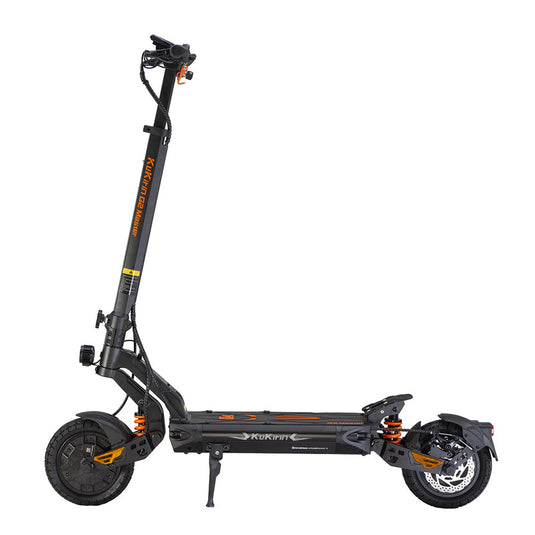
Adding motor output is useful only when it changes what happens under resistance. A hill, heavier combined load, loose surface or repeated acceleration increases the demand at the tire. With one driven wheel, all propulsion must pass through one motor and one contact patch. G2 Master distributes that work across the front and rear.
The functional effect is stronger response when a single motor would be approaching its practical limit. For the buyer, that means less need to plan around the weakest part of a route. The real use case is not a one-time top-speed run; it is a commute with the same climb every day, a heavier rider who needs operating margin, or private-land riding where repeated acceleration is part of the experience.
Design insightThe second motor earns its cost when it removes a repeated constraint. If the route is flat and moderate, it becomes weight and energy demand carried for little return.
The 52V architecture supports the two-motor system with a higher electrical baseline than the 48V G2 Max. That does not make voltage a benefit by itself. Its value appears when the controller, battery and motors work together to deliver the response the platform was built for.
The 52V 20.8Ah Battery Supports Output and Route Reserve
KuKirin lists a 52V 20.8Ah lithium-ion battery and up to 70 km of range. The specification exists for two jobs. First, it supplies a higher-voltage dual-motor platform. Second, it gives the scooter enough stored energy to remain useful beyond short urban hops.
Those jobs compete. Using both motors hard, riding near the upper speed modes, climbing frequently or carrying more mass consumes energy faster. A buyer planning a long route should treat 70 km as a controlled-condition comparison figure and build a reserve for wind, temperature, stop-start traffic, tire pressure and battery ageing.
The listed 10–11 hour charging time also changes ownership. This is better suited to overnight charging than a quick turnaround between two demanding sessions. The design favors capacity and performance continuity over rapid top-ups.
The Chassis Converts Motor Output Into Usable Contact
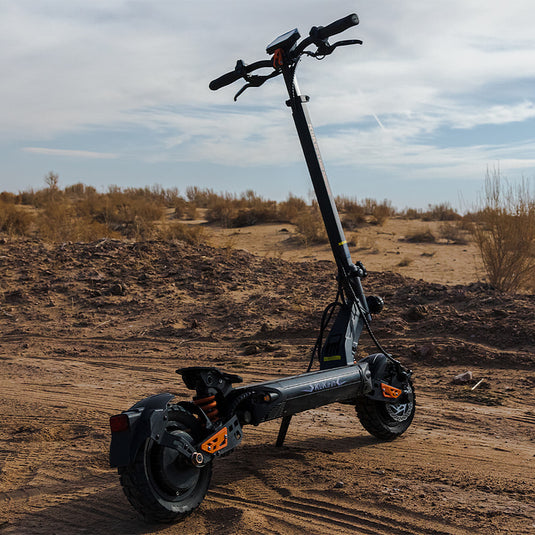
Two motors cannot create useful traction if the tires skip across broken ground. The 10-inch pneumatic off-road tires provide air volume and tread compliance, helping the contact patches follow surface changes. Suspension then manages larger movements that the tires cannot absorb alone.
The buyer benefit is control margin on cracked pavement, compacted tracks and transitions where a narrow solid tire would transmit more impact. The 160 mm listed ground clearance broadens the surfaces the chassis can approach, though it does not turn the scooter into a motorcycle or remove the need to slow for obstacles.
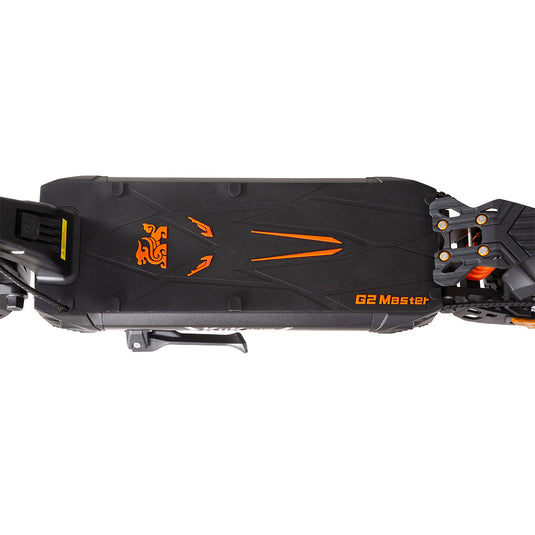
The aluminum-alloy frame and 41.5 kg mass give the platform a substantial base for the motor and battery system. That can support a planted feel, but the cost appears immediately when the scooter must cross stairs, narrow landings or a small vehicle opening.
Control Hardware Matters More as Performance Rises
The official listing provides three speed levels—20, 40 and 60 km/h—with a default speed of 25 km/h. Modes make the available output easier to match to the setting. Lower response is useful around shared spaces and tight maneuvers; higher settings belong only where law, surface, visibility and rider skill allow them.
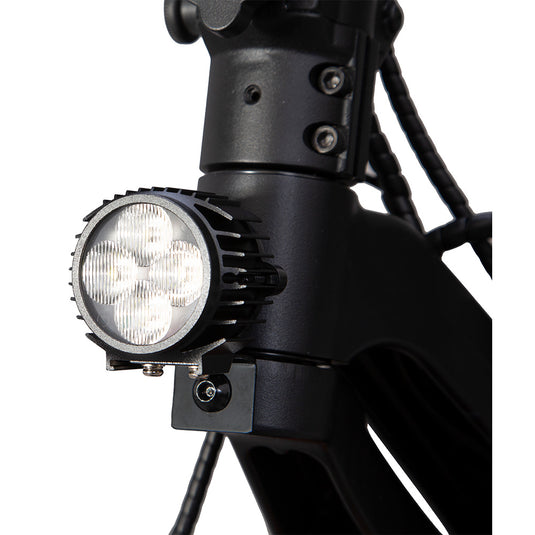
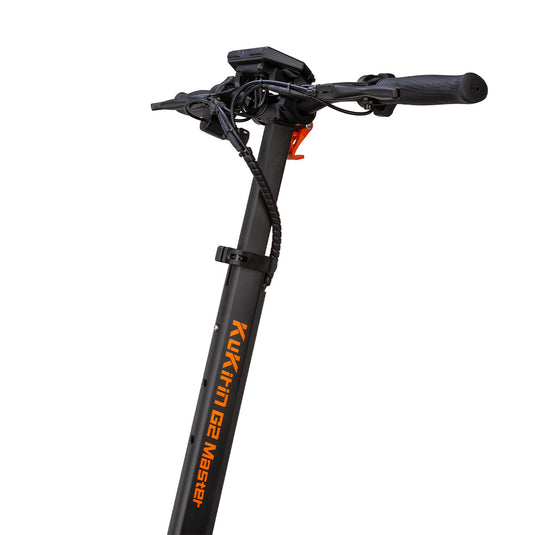
The headlight is mounted low on the front assembly, illuminating the path from near the chassis. Its practical value is early surface recognition, while the handlebar layout keeps display information and braking controls inside the rider’s immediate operating zone.
KuKirin lists a braking range of 6–8 m, but stopping distance changes with speed, load, tire grip, road condition and rider input. Treat the figure as supplied product data, not a universal outcome. The faster the selected mode, the more space and anticipation matter.
Folding Reduces Storage Length, Not Carrying Effort
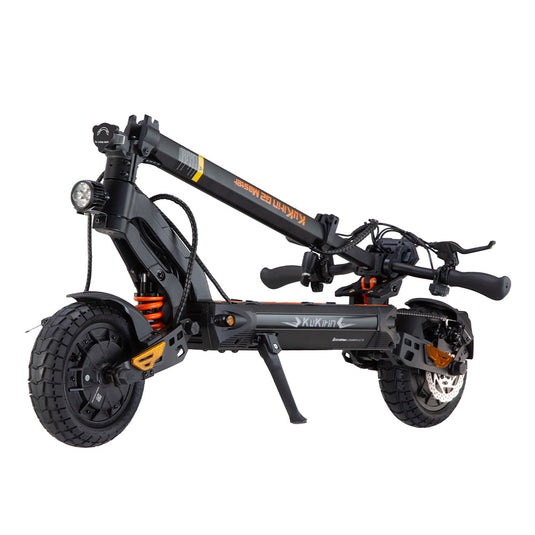
The folded dimensions—1260 × 595 × 595 mm—show what the hinge is designed to solve. It lowers the stem and makes the scooter easier to place in a garage, storage room or sufficiently large vehicle. It does not erase the 41.5 kg listed mass.
That distinction prevents a common buying mistake. A folding commuter scooter is often expected to be carried onto public transport or upstairs. G2 Master is better understood as a performance scooter that folds for storage. Buyers should measure doorways, vehicle openings and storage space, then account for how the full weight will be moved without riding.
KuKirin G2 Master vs G2, G2 Max, G4 and M4 Max
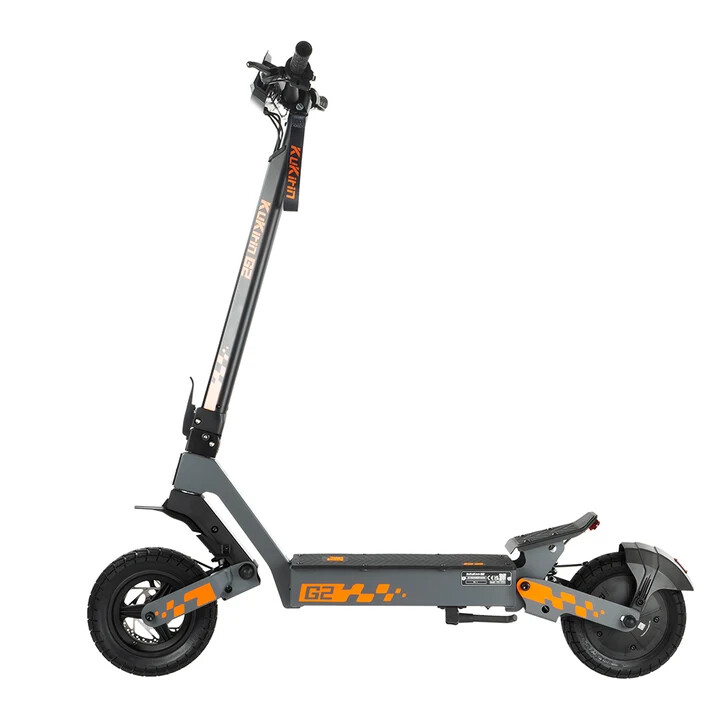
KuKirin G2 2026
800W · Up to 55 km · 45 km/hMission: provide a meaningful step above basic short-trip scooters without making dual-motor performance part of the cost and weight.
Best for: riders whose route needs suspension and useful reserve but gives a second motor no repeated job.
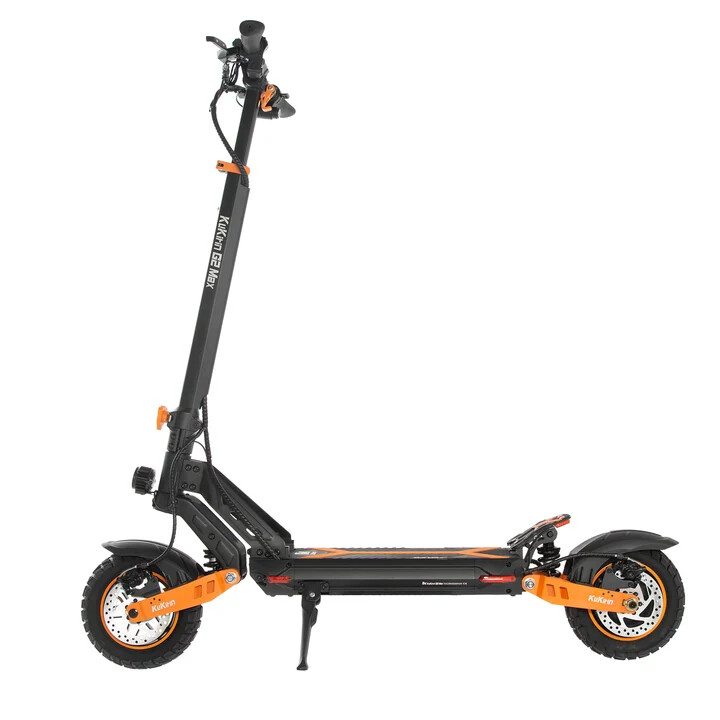
KuKirin G2 Max
1000W · Up to 70 km · 55 km/hMission: extend the single-motor platform toward longer routes and stronger output while retaining a simpler drive system.
Best for: buyers who prioritize listed range and do not need two-wheel propulsion.
KuKirin G2 Master
1000W × 2 · Up to 70 km · 60 km/hMission: keep stronger response available on gradients, under load and during repeated acceleration by distributing propulsion across both wheels.
Best for: experienced riders with ground-level storage and a route that gives the second motor a clear purpose.
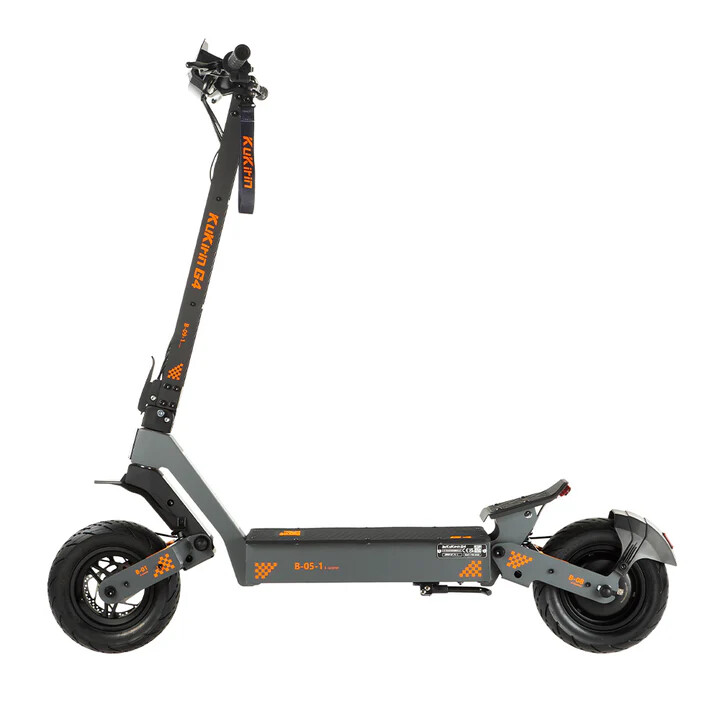
KuKirin G4 2026
2000W · Up to 75 km · 70 km/hMission: make high-output riding and a higher listed speed the center of the product rather than divide power across the G2 Master architecture.
Best for: experienced buyers deliberately selecting the high-speed platform and prepared for its legal, storage and control demands.
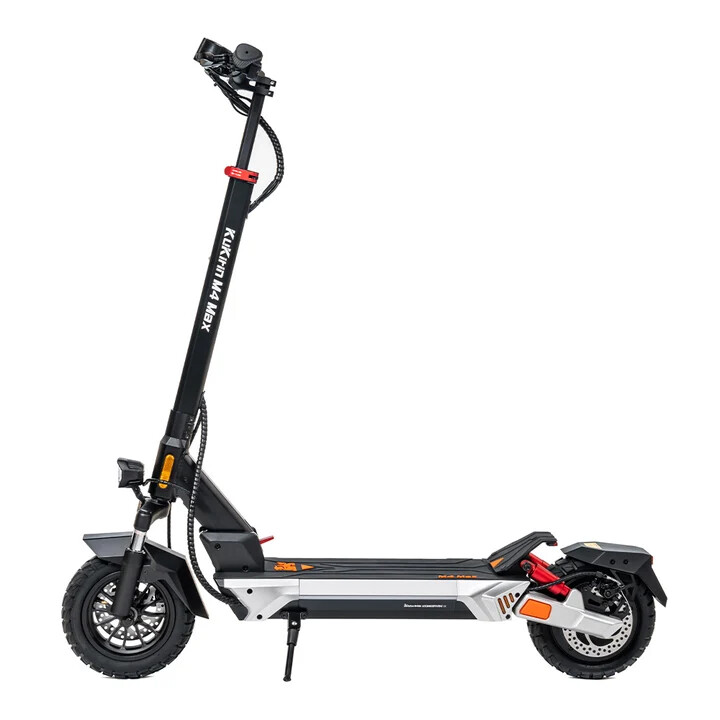
KuKirin M4 Max
800W · Up to 64 km · 45 km/hMission: offer a different 800W chassis and range proposition for buyers who do not need the G2 Master’s dual-motor role.
Best for: shoppers comparing utility and platform layout before paying for a performance upgrade.
Choose according to the hardest repeated part of the route. G2 is the balanced value baseline. G2 Max adds single-motor range and output. G2 Master addresses traction and response with two motors. G4 targets a higher-speed 2000W role. A larger specification is worthwhile only when its design mission solves a real ownership problem.
Keep Current Price, Coupon and Policies on the Store Page
Price determines whether G2 Master is a rational upgrade, but the number changes with seasonal sales. Coupon names, stock and purchase policies can change as well. CandidCodes maintains those commercial details on the KuKirin Store Page so this design analysis does not become stale when a campaign ends.
Current price, coupon and deal
Check the Store Page for the live price context, active coupon, eligible model and checkout conditions. The code is revealed there so verification and the tracked shopping path remain together.
Shipping and stock
Confirm current availability, dispatch location, delivery estimate, shipping threshold and destination eligibility before ordering.
Returns
Read the live return window, product-condition requirements, exclusions and responsibility for return costs before opening packaging or using the scooter.
Warranty
Verify the selected warranty option, covered parts, exclusions and claim process. Coverage matters more than the headline duration when a dual-motor drive and large battery are involved.
View the current KuKirin G2 Master price, coupon and policy summary.
What to Check Before Buying
Check local rules first. A merchant-listed maximum of 60 km/h does not establish where the scooter may legally be ridden or at what speed. Confirm vehicle classification, permitted spaces, speed limits, registration or insurance requirements and protective-equipment rules for the intended location.
Measure the ownership route next. At 41.5 ± 0.5 kg, G2 Master should have a realistic path into storage. IPX4 is limited splash resistance, not permission for deep water, pressure washing or careless wet-weather storage.
Finally, decide whether two motors have a repeated job. If the route is moderate and flat, G2 Max can preserve the same listed 70 km comparison while avoiding the complexity of selecting G2 Master solely for unused output.
Is the KuKirin G2 Master Worth Buying?
Yes—when the buyer can name the route condition that requires two driven wheels. The value chain is coherent: two 1000W motors distribute propulsion, the 52V 20.8Ah battery supports the drive system, pneumatic off-road tires and suspension keep the chassis connected to imperfect ground, and the wide deck gives the rider room to manage acceleration and braking.
No—when the upgrade is driven only by a larger specification. Choose G2 Max for a simpler 1000W, 70 km listed-range proposition; G2 for lower-output urban balance; or a lighter commuter scooter when carrying and compact storage dominate the week.
Check the latest KuKirin G2 Master offer and purchase terms.
Related KuKirin Reviews and Buying Guides
Frequently Asked Questions
Who is the KuKirin G2 Master best for?
It is best for experienced riders whose repeated routes include gradients, heavier loads or acceleration demands that expose the limits of a single-motor scooter. Its 41.5 kg listed weight makes it less suitable for frequent stair carrying.
Does the KuKirin G2 Master have two motors?
Yes. The official listing specifies two 1000W brushless motors on a 52V platform. Their value is shared traction and stronger response under load, not simply a larger headline number.
What range does the KuKirin G2 Master list?
The official product page lists up to 70 km. That is a comparison figure, not a guaranteed distance. Dual-motor use, speed, rider load, gradients, temperature, tire pressure and stop-start riding affect consumption.
What is the listed maximum speed?
The official listing states up to 60 km/h and a default speed of 25 km/h. Buyers must follow the legal limits and permitted-use rules that apply to their location.
What battery does the G2 Master use?
The official listing specifies a 52V 20.8Ah lithium-ion battery and a listed charging time of about 10 to 11 hours. The higher-voltage platform supports the dual-motor system, while the capacity provides the energy reserve needed for longer routes.
Is the KuKirin G2 Master easy to carry?
Not for most buyers. Its listed weight is 41.5 ± 0.5 kg. The folding mechanism helps it enter storage or a suitable vehicle, but folding does not turn it into a light commuter scooter.
Should I buy the G2 Master or G2 Max?
Choose G2 Master when dual-motor response is the reason for upgrading. Choose G2 Max when a 70 km listed range and a simpler single-motor 1000W platform better match the route.
Where can I check the current price, coupon and policies?
Use the CandidCodes KuKirin Store Page. It keeps the current price context, coupon, eligible deals, stock, shipping, returns and warranty information in one maintained location.

CandidCodes may earn a commission from purchases made through sponsored links in this article. Affiliate Disclosure. This does not change the price you pay. Specifications, coupon eligibility, stock and policies should be confirmed before ordering.
Editorial basis: this is a design-led analysis based on KuKirin’s official product listing and supplied product images. It does not claim hands-on road testing. Listed speed, range, climbing and braking figures are comparison data; current commercial terms are maintained on the CandidCodes KuKirin Store Page.