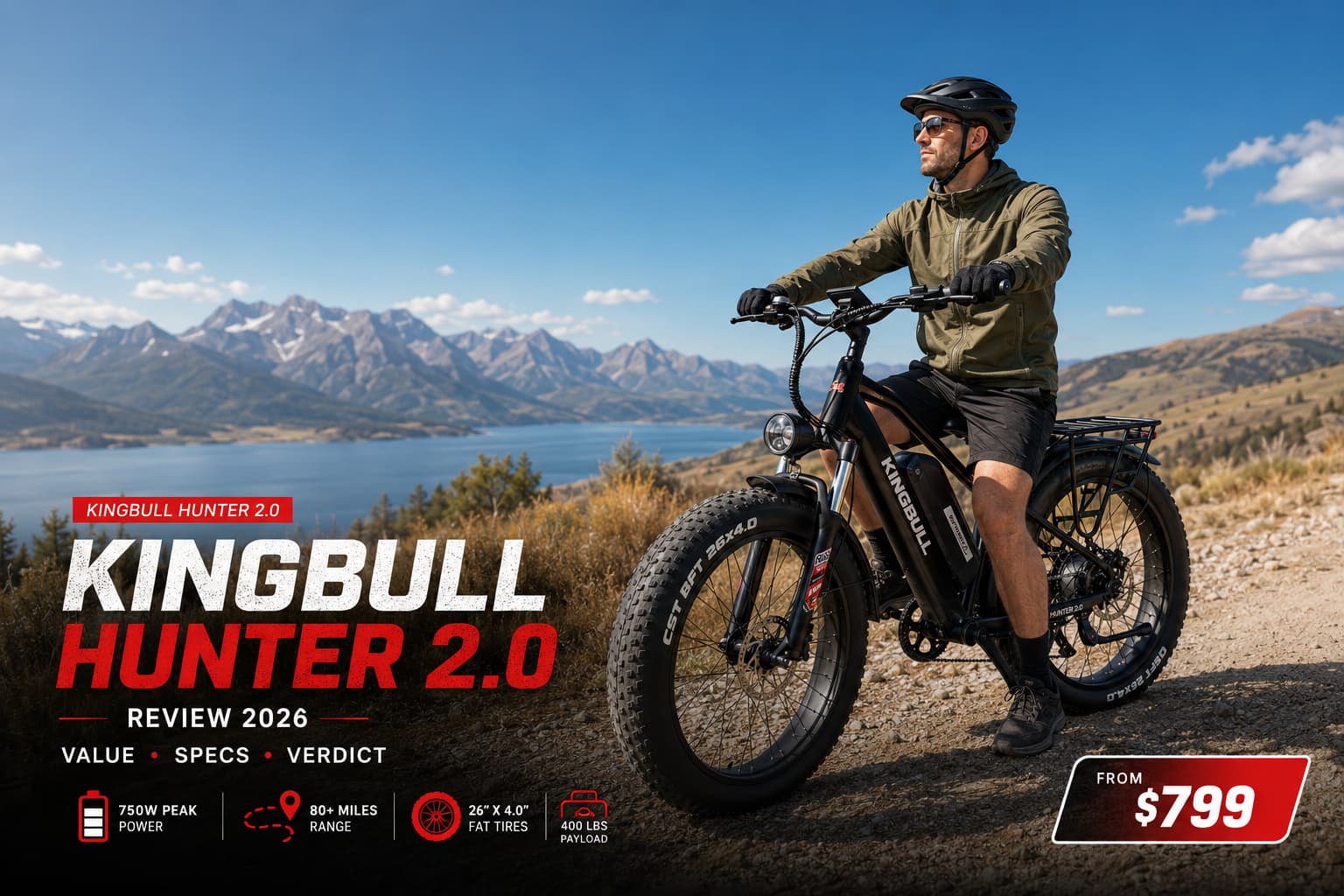
Buy the Hunter 2.0 if you want the lowest-price Kingbull fat-tire entry point with solid visible specs. It makes the most sense for value-focused riders who want 26 x 4-inch tires, a 750W motor, hydraulic brakes and a 720Wh battery without stepping into the $1,000+ tier.
Range, speed and climbing figures are manufacturer-listed specs and can vary with rider weight, terrain, assist level, weather and local rules. Always check current product details, assembly needs, helmet laws and local e-bike regulations before riding.
Who Is the Kingbull Hunter 2.0 Best For?
The Hunter 2.0 is best for shoppers who want a budget-friendly fat-tire e-bike for mixed surfaces, relaxed off-road paths, gravel, basic trail use and everyday local riding. It is not the most premium Kingbull model, but that is the point: this bike wins because the price-to-spec ratio is easy to understand.
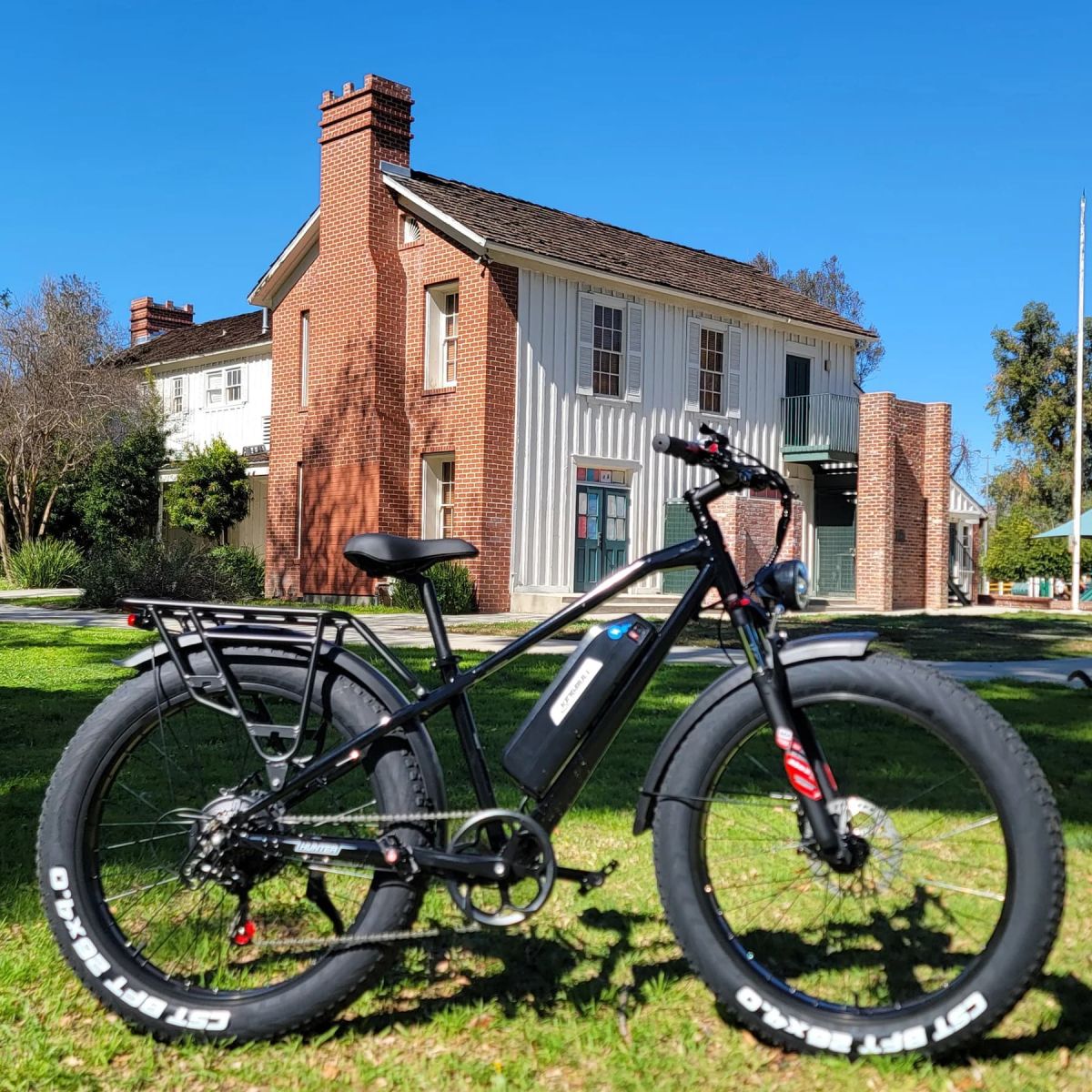
The strongest reason to choose Hunter 2.0 is simple: it gives you a full-size fat-tire setup and practical power specs at one of the lowest listed Kingbull sale prices.

Choose it for fat-tire grip, relaxed mixed-surface rides and a simple value-first purchase. Skip it if you know you want full suspension or a long-range premium setup.
Kingbull Hunter 2.0 Specs That Actually Matter
Spec sheets love pretending every number matters equally. They do not. For the Hunter 2.0, the important numbers are the 750W motor, 720Wh battery, 26 x 4-inch fat tires, hydraulic brakes and up to 55-mile listed range.
Hunter 2.0 Spec Breakdown
Kingbull lists the Hunter 2.0 with a 750W brushless geared hub motor and stronger peak-output messaging. For buyers, the practical takeaway is simpler: this model is built as a budget fat-tire e-bike with enough support for local hills, mixed-surface riding and everyday utility without pretending to be a premium trail weapon.
The 720Wh battery and up to 55-mile listed range give the Hunter 2.0 a solid value story. It sits in a comfortable zone for shoppers who want useful battery capacity without paying for Kingbull’s higher-tier premium models. Real range still depends on assist level, terrain, payload and weather, because physics refuses to join the marketing department.
The 26 × 4-inch fat tires are a big part of why this bike feels more versatile than a narrow-tire commuter. They help with grip and stability on loose surfaces, gravel and rougher paths, while also supporting the Hunter 2.0’s value-first off-road identity. If you want that rugged look and extra surface confidence, this spec does real work.
Hydraulic disc brakes and front fork suspension are meaningful quality signals for a bike in this price tier. They improve control and ride comfort for everyday mixed riding. Just keep the positioning realistic: this is a strong value fat-tire e-bike for practical use, not a downhill specialist designed to audition for an action movie.
Is the Hunter 2.0 Worth It for the Price?
For shoppers comparing Kingbull’s lineup, the Hunter 2.0 is the cleanest “start here” model. The visible $799 sale price puts it below Voyager 2.0, Rover 2.0, Verve, Trekker, EX Titan and Jumper Go. That does not make it better than every model. It makes it the easiest to justify if your budget is the main filter.
You want the lowest entry price
Hunter 2.0 is the easiest Kingbull fat-tire model to justify when price matters more than premium suspension or longer-range upgrades.
You want more range
Hunter 2.0S or long-range models may fit better if you are shopping around battery capacity and longer listed range.
You need full suspension
Rover 2.0, EX Titan or Jumper Go are better matches if comfort and suspension are more important than the lowest sale price.
Kingbull Hunter 2.0 Pros and Cons
- Low visible sale price for a full-size fat-tire e-bike
- 750W motor and 720Wh battery are strong value signals
- 26 x 4-inch tires fit mixed surfaces better than narrow commuter tires
- Hydraulic disc brakes are a welcome spec at this price tier
- Easy to compare against higher Kingbull models through the pricing article
- Sale price and gifts can change without notice
- Range is an “up to” figure, not a promise from the universe
- Full-suspension shoppers should compare Rover, EX Titan or Jumper Go
- Assembly, shipping timing and color availability may vary
- Local e-bike class rules still matter before riding on roads or trails
Hunter 2.0 vs Other Kingbull Models
If Hunter 2.0 feels too basic, compare it against Hunter 2.0S for more listed range, Voyager 2.0 for cargo utility, Rover 2.0 for full-suspension value, and EX Titan for a premium full-suspension setup.
Hunter 2.0S
Better if you like the Hunter concept but want a larger listed battery and a longer range tier before moving into heavier premium pricing.
Voyager 2.0
Better if errands, baskets, trailer options and cargo utility matter more than simply landing the lowest fat-tire entry price.
Rover / EX Titan
Better if trail comfort, suspension performance and a more premium ride feel matter more than keeping the bike under the $800 tier.